
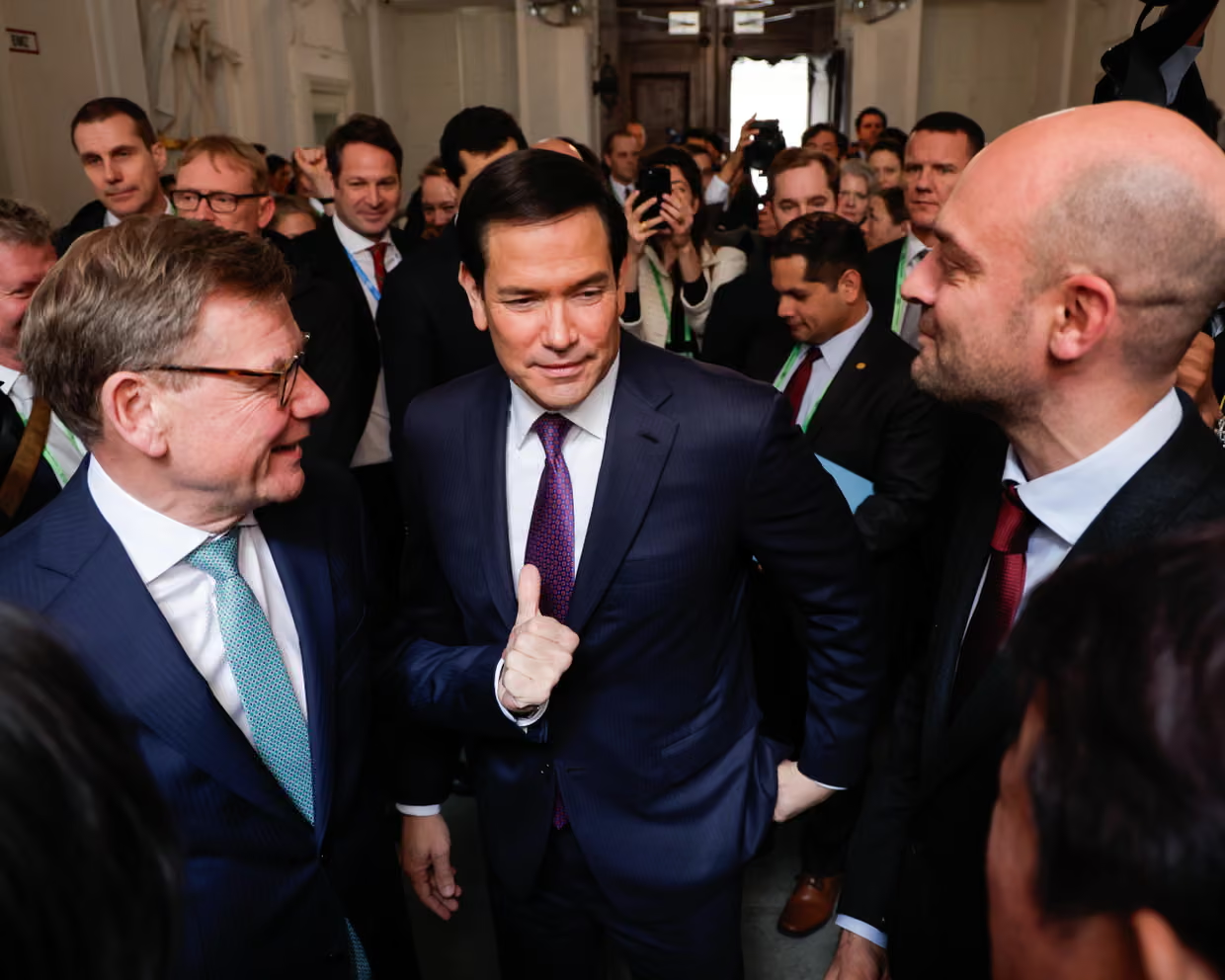
At the Munich Security Conference, US Secretary of State Marco Rubio delivered a clear message to European leaders — Washington wants to strengthen its alliance with Europe, but under the framework shaped by Donald Trump’s vision of a new global order.
Rubio described the United States as “a child of Europe,” stressing that both sides share deep historical and cultural roots. He said America would prefer to build the next phase of global leadership alongside Europe rather than act alone — though he made it clear the US was prepared to move forward independently if necessary.
While acknowledging that Americans can come across as blunt or urgent, Rubio said that tone reflects genuine concern about Europe’s trajectory and the shared destiny of both continents.
Observers noted the speech struck a more measured tone than previous statements from senior US officials. However, many also pointed out that the proposal reflected Trump’s priorities rather than a fully equal partnership.
Rubio rejected the idea of a weakened Europe weighed down by “guilt or shame,” insisting the US had no intention of overseeing what he described as the West’s gradual decline. Instead, he framed the moment as an opportunity to revive what he called the greatest civilisation in history.
He argued that both Europe and America had made strategic missteps — including heavy dependence on globalisation, prioritising welfare expansion over defence spending, and embracing what he termed a “climate cult.” On border control, Rubio maintained that securing national frontiers is an act of sovereignty, not hostility, warning that failing to do so could destabilise societies.
Turning to global institutions, Rubio called for reform rather than dismantlement. He suggested that under Trump’s leadership, the US had taken more decisive action in conflicts such as Gaza and Ukraine than multilateral organisations.
Although Ukraine was not the central focus of his remarks, Rubio said ongoing discussions had reduced disagreements, even if the most complex issues remained unresolved.
He closed by urging European leaders to align with Washington’s direction, framing it as a shared path forward — one the United States hopes Europe will choose to walk together.

