
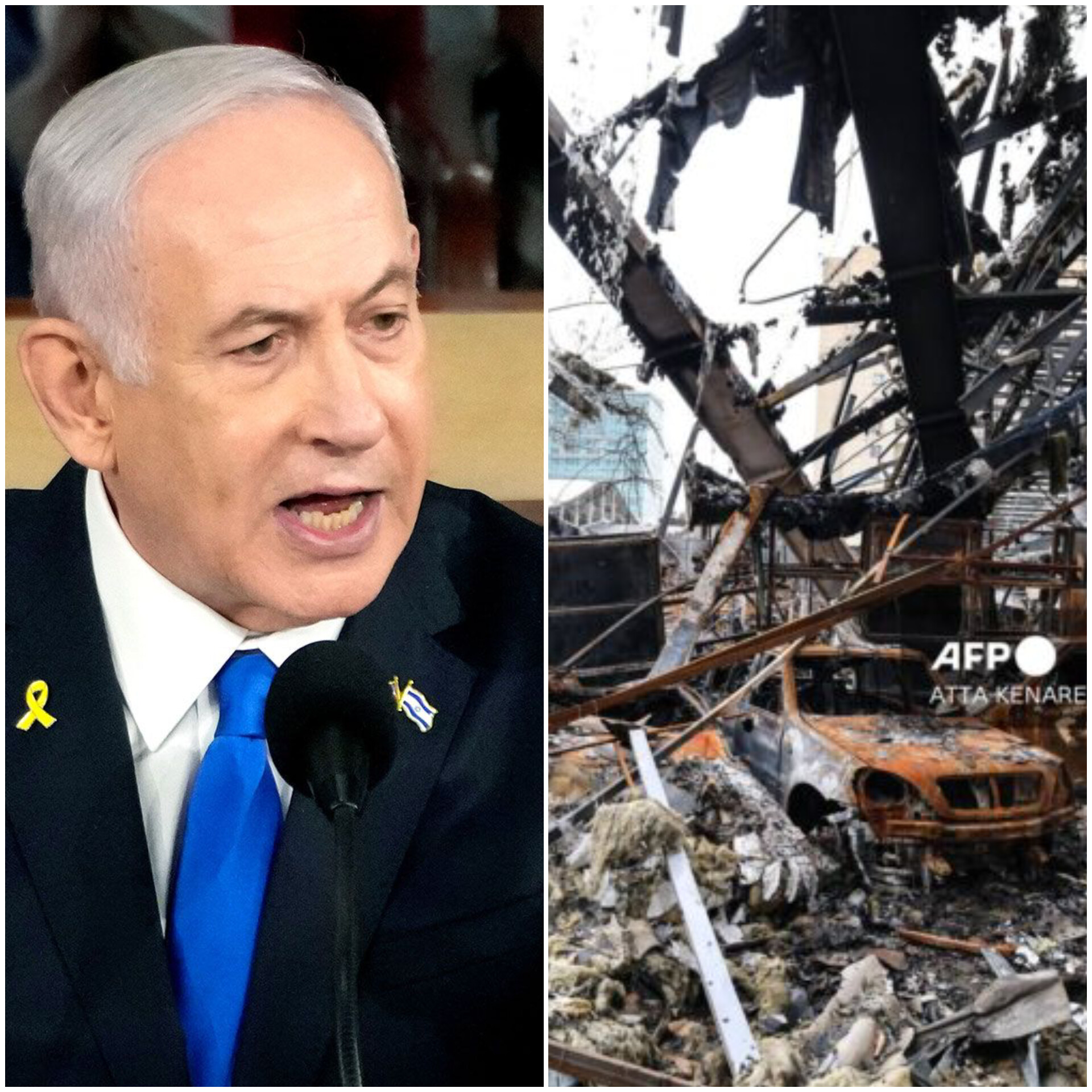
Israel said Monday it was carrying out strikes on military targets across Tehran, a day after US President Donald Trump said a deal with Iran could “soon” be reached, while keeping the option of ground operations open.
Iran responded with fresh attacks on Israel, Kuwait and Saudi Arabia after weekend strikes hit its power facilities, causing outages in parts of Tehran and nearby areas.
The conflict has shaken the global economy, with fuel shortages reported across much of Asia, stock markets unsettled, and oil prices surging — with the main US benchmark climbing above $100 a barrel and Brent nearing $117.
As Israel intensified its offensive against Iran-backed Hezbollah in southern Lebanon, Indonesia confirmed that one of its peacekeepers was killed after a projectile struck a UN position, according to the United Nations Interim Force in Lebanon, which has launched an investigation.
Speaking aboard Air Force One, Trump pointed to the number of Iranian leaders killed during the month-long conflict, claiming “regime change” had already occurred and describing the new leadership as “much more reasonable.”
He added that a deal with Iran could be reached soon.
In a separate interview, Trump said he would consider taking control of Iran’s oil resources, including the Kharg Island export hub, comparing the idea to US plans in Venezuela.
Despite ongoing diplomatic signals, fighting showed no signs of slowing, with Israel reporting it had intercepted missiles launched from Iran while continuing strikes on what it called military infrastructure in Tehran.
Pakistan has stepped in as a mediator, hosting foreign ministers from Saudi Arabia, Turkey and Egypt in Islamabad to discuss ways to end the crisis. Officials said both Iran and the United States expressed confidence in Pakistan’s role in facilitating talks, with support also coming from China and the United Nations.
However, Iran’s parliament speaker accused Washington of using diplomacy as a cover for potential military action, warning that any ground incursion would be met with force.
Even as diplomatic efforts continue, the United States has increased its military presence in the region, including the deployment of the USS Tripoli, while reports suggest preparations for possible extended ground operations.
For civilians in Iran, the impact has been severe, with residents describing relentless night-time strikes and growing exhaustion.
The conflict has expanded across the region, with Iran targeting Gulf states and effectively closing the Strait of Hormuz — a critical global oil route — to vessels from countries it considers hostile.

