
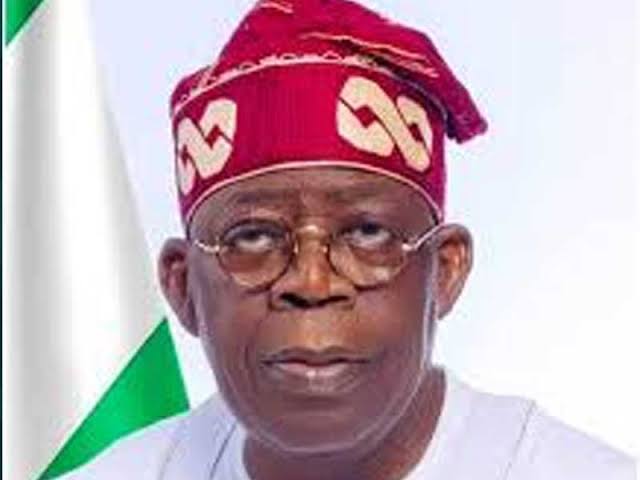
Under the leadership of President Bola Tinubu, the Federal Government has secured $6.45bn in loans from the World Bank over the past 16 months. This figure rose following the approval of three new loans, totalling $1.57bn, with further increases expected in the coming months.
In total, the World Bank has approved 36 loans for Nigeria, amounting to $24.088bn over the last five years. These loans are intended to fund various development projects across the country, but concerns are growing about the rising debt burden and its long-term economic impact.
Some of the key projects supported by these loans under Tinubu’s administration include $750m for power, $500m for women’s empowerment, $700m for girls’ education, and $750m for renewable energy.
For many Nigerians, the government’s ongoing borrowing raises concerns, as years of poor infrastructure and high unemployment have led to dissatisfaction with how previous loans have been utilized. While some citizens acknowledge the need for external resources due to the country’s large population, they remain sceptical about the effectiveness of past borrowings.
The World Bank has consistently provided loans to Nigeria since 2020. In that year alone, it approved 15 loan requests totalling $6.36bn, including projects like the Nigeria Rural Access and Agricultural Marketing Project ($510m) and the Nigeria Digital Identification for Development project ($430m). By 2021, loan approvals had dropped to six projects worth $3.2bn, and in 2022, the administration of former President Mohammadu Buhari secured loans worth $1.26bn for six projects, including $500m for a livestock productivity project and $750m for business reforms.
In 2023, loan requests surged to $2.7bn for four projects, including $750m for power sector recovery and $750m for renewable energy scale-up. Already in 2024, five projects worth $3.82bn have been approved, with more funding expected before the year’s end.
On June 13, the World Bank announced a $2.25bn loan package for Nigeria’s economic stability and vulnerable populations. This includes $1.5bn for economic stabilization reforms and $750m for resource mobilization reforms, with $751.88m of the former already disbursed.
The World Bank is also set to approve an additional $500m loan for the Rural Access and Agricultural Marketing Project by December 2024.
In a recent statement, the World Bank noted that its newly approved loans, totalling $1.57bn, would focus on strengthening human capital by improving health services for women, children, and adolescents, and building resilience to climate change through enhanced dam safety and irrigation. This includes $500m for governance reforms, $570m for the Primary Healthcare Provision Strengthening Programme, and $500m for sustainable power and irrigation projects.
The World Bank’s commitment to Nigeria’s development was reaffirmed in its approval on September 26, 2024, emphasizing the focus on improving human capital and addressing climate threats.
According to Nigeria’s Debt Management Office, the country owed the World Bank $15.59bn as of March 2024. Debt servicing costs have surged, with Nigeria spending N6.04tn in the first half of 2024, a 68.8% increase from N3.58tn in the same period of 2023. This increase is largely attributed to naira devaluation, which has significantly raised the cost of foreign debt repayments.

