
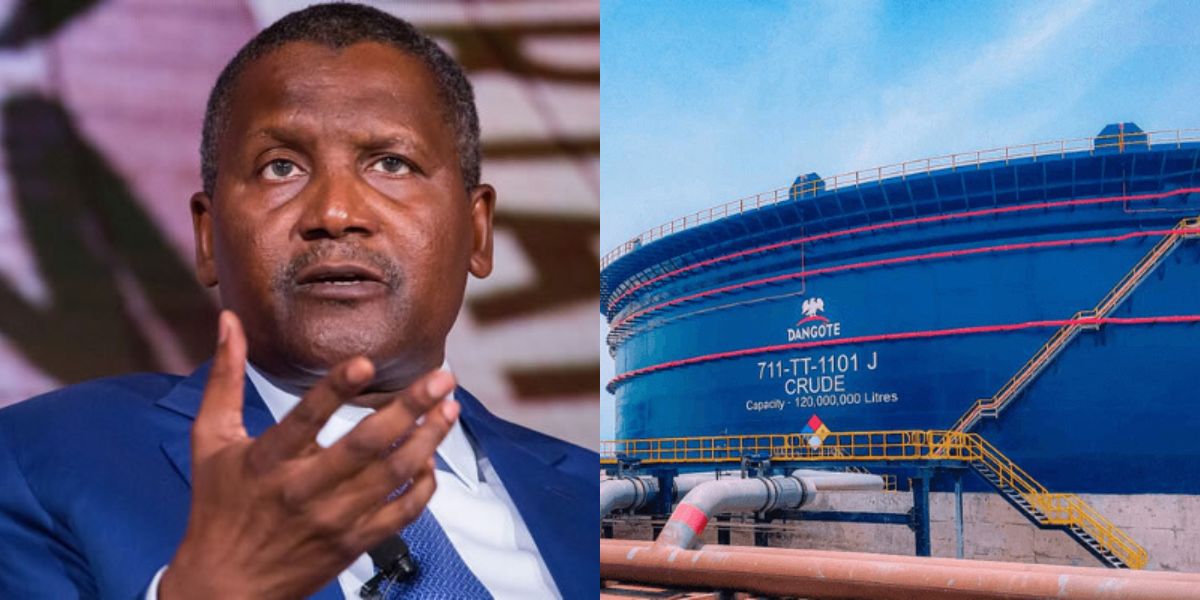
Dangote NNPC fuel price war is intensifying after the Nigerian National Petroleum Company Limited raised concerns over pricing and market control in the downstream petroleum sector. The Dangote NNPC fuel price war is now at the centre of a legal dispute in Lagos as both parties clash over fuel imports, pricing structure, and competition in Nigeria’s oil market.
The NNPC told the Federal High Court in Lagos that petroleum products from the Dangote Refinery are sold at fluctuating and relatively high market prices. It warned that limiting fuel imports could create a monopoly situation that may negatively impact Nigeria’s downstream petroleum industry.
In its counter-affidavit, the NNPC argued that the refinery’s suit against regulators and the Attorney-General is premature, incompetent, and an abuse of court process. It also claimed that Dangote Refinery has not provided sufficient evidence to prove it can meet Nigeria’s total fuel demand independently.
Oil marketers under PETROAN supported the NNPC’s position, insisting that open competition is essential to prevent price exploitation and ensure steady fuel supply. They argued that multiple supply sources would help stabilise fuel prices and improve distribution efficiency nationwide.
The dispute also involves allegations surrounding import licences issued by the Nigerian Midstream and Downstream Petroleum Regulatory Authority, which allow marketers to import large volumes of petrol despite rising domestic production capacity.
NNPC further stated that reliance on a single refinery could expose Nigeria to supply disruptions, price instability, and energy insecurity. It emphasised that fuel distribution requires logistics, storage, transportation, and backup systems beyond refining capacity alone.
The company also rejected claims of sabotage, insisting that crude supply arrangements are governed by commercial realities and national energy needs.
Read more:
- Aliko Dangote reveals why he failed to buy Arsenal F.C.
- Nigeria and Türkiye sign new mining cooperation agreement
Meanwhile, Dangote Refinery has argued that continued fuel imports undermine local refining investment and distort market competition. The case continues to highlight tensions between local production ambitions and import-dependent supply structures in Nigeria’s deregulated fuel market.
Industry stakeholders say the outcome of the case could reshape pricing, competition, and energy security in Nigeria’s downstream petroleum sector.

