
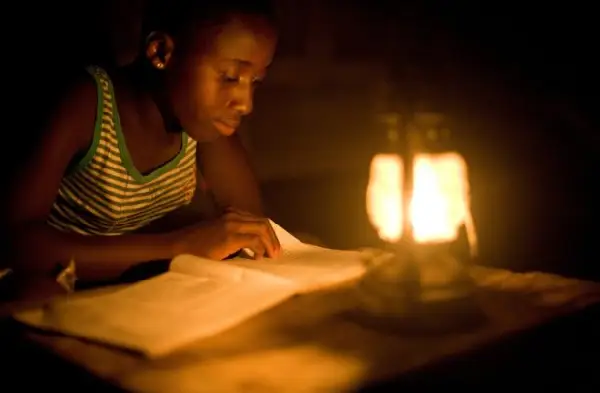
Exasperated Ghanaians, already grappling with frequent and unplanned power outages, are bracing for more disruption after electricity distributors announced increased grid interruptions in the coming weeks.
The blackouts, known locally as “dumsor” in Ghana’s Akan language, are exacerbating challenges for businesses already struggling amid the country’s worst economic crisis in a decade.
On Thursday, the Ghana Grid Company and the Electricity Company of Ghana announced a three-week period of load management due to maintenance work by a gas supplier in Nigeria. Nigeria provides a portion of the gas needed for Ghana’s power plants.
This announcement followed a warning from WAPCo, the operator of the gas pipeline from Nigeria, about reduced gas availability due to maintenance.
The news has left Ghanaians increasingly frustrated. Judith Esi Baidoo, a 50-year-old frozen poultry vendor in Accra, expressed her concerns: “The current unannounced power cuts are already making it very hard to keep my poultry frozen. Now, with this three-week load management plan, I fear my entire stock will spoil. I don’t know how my business can survive this.”
The erratic power supply is expected to become a major issue in the campaign for December’s presidential election. Timothy Oddoye, a mobile phone repairer in Accra, said: “The government has failed us. They’ve had years to fix these problems, yet we are still suffering from the same issues. How can we grow our businesses when we can’t even rely on basic electricity?”
Despite being one of the African countries with the most advanced electrification, Ghana continues to face chronic power shortages. The domestic electricity production, often reliant on old and poorly maintained power plants, has not kept pace with rising demand.
According to the International Energy Agency, Ghana generates 34 percent of its electricity from hydropower and 63 percent from gas. Despite producing both oil and gas, the country still needs to import gas from Nigeria via the 678-kilometre West African Gas Pipeline through Benin and Togo.
“The reliance on gas, especially from external suppliers, leaves us vulnerable,” said Ben Boakye, executive director of the Africa Centre for Energy Policy. “The government must prioritize investments in renewable energy and upgrade our existing hydro and thermal plants to ensure consistent power supply.”
Public frustration at the power cuts peaked on June 8, when hundreds of Ghanaians, led by prominent celebrities, protested in Accra under the slogan #DumsorMustStop.
These power cuts are especially troubling as Ghana emerges from an economic crisis, with inflation peaking at 54 percent in December 2022 before falling to 25 percent in April 2023, yet the population continues to suffer.

