
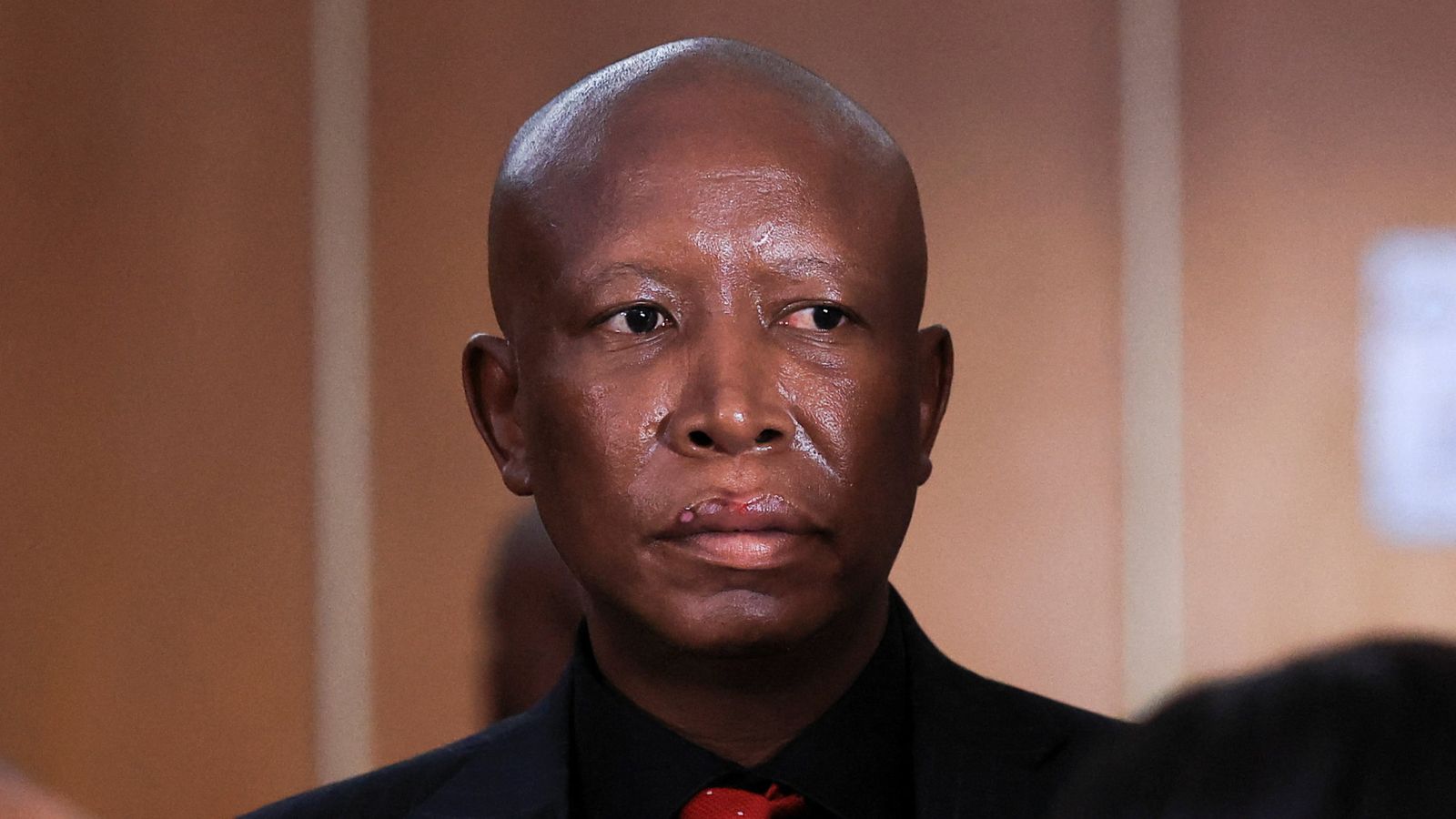
Julius Malema has been sentenced to five years in prison by a South African court for firing an assault rifle into the air at a rally eight years ago, in a ruling that has intensified political debate across South Africa. The case, widely referred to as the Malema prison sentence, has sparked strong reactions from both supporters and critics.
Hundreds of supporters dressed in red gathered outside the court during sentencing in the politically sensitive case involving the Economic Freedom Fighters leader. The crowd sang struggle songs and chanted slogans, showing firm support for Malema despite the verdict.
Magistrate Twanet Olivier said the 45-year-old deliberately breached firearm laws when he discharged a weapon at an EFF rally in 2018, describing the act as “not an impulsive act” but “the event of the evening.” The court emphasised that the conduct demonstrated clear disregard for public safety and legal responsibility.
Malema’s defence argued that the shots were fired purely in celebration and were never intended to harm anyone. However, prosecutors rejected this explanation, insisting the act still constituted a serious violation of firearm regulations.
The court had considered a maximum sentence of 15 years after Malema was found guilty in October, while his legal team has confirmed plans to appeal the ruling. Analysts suggest the appeal process could delay any final enforcement of the Malema prison sentence, potentially keeping the case active for months.
The Economic Freedom Fighters has described the ruling as politically motivated, claiming it is part of a broader effort to silence its leader. Some supporters have also threatened protests if he is taken into custody, raising concerns about possible unrest.
The magistrate, however, stressed that “it is not a political party who has been convicted here… it is a person, an individual,” reinforcing that the judgment was based strictly on legal grounds rather than political affiliation.
The case was brought by AfriForum, which has frequently clashed with Malema over his controversial use of political chants, including “Kill the Boer,” a phrase critics argue is inflammatory, though it has not been ruled as hate speech by the courts.
Read also:
- From Prime Minister to Prison Cell: Appeal Court Rules Against Moussa Mara
- Court grants bail to Anthony Joshua’s driver, adjourns trial until February 25

