
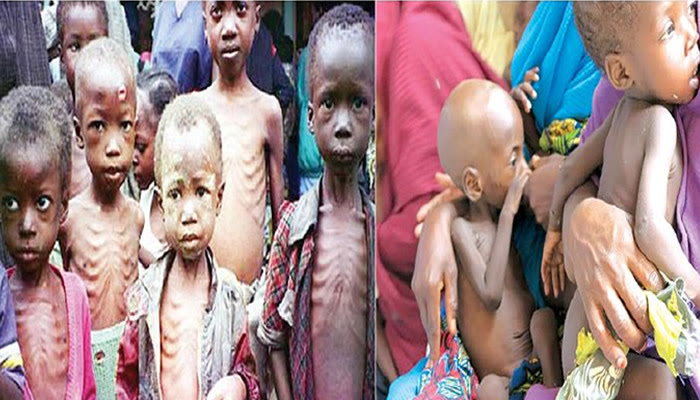
A recent United Nations Children’s Fund (UNICEF) report on child nutrition reveals that 65% of children experiencing food poverty globally are concentrated in Nigeria and 19 other countries. These include Afghanistan, Bangladesh, China, Côte d’Ivoire, the Democratic Republic of the Congo, Ethiopia, Ghana, India, Indonesia, Myanmar, Niger, Pakistan, the Philippines, Somalia, South Africa, Uganda, Tanzania, and Yemen.
The report indicates that worldwide, 27% of children under five years old (181 million) are living in severe food poverty during early childhood. UNICEF defines child food poverty as the inability to access and consume a nutritious and diverse diet in early childhood.
This study examined the status, trends, inequities, and drivers of child food poverty in early childhood. UNICEF emphasizes that while child food poverty harms all children, it is particularly detrimental in early childhood. Insufficient intake of essential nutrients during this critical period can severely impact child survival, physical growth, and cognitive development, perpetuating a cycle of poverty and deprivation.
Although severe child food poverty affects all regions globally, its impact is not uniform. Progress towards ending this issue is slow overall, but some regions and countries are demonstrating that improvement is possible.
The report also notes that the global food and nutrition crisis, localized conflicts, and climate shocks are exacerbating severe child food poverty, especially in fragile and humanitarian settings. In Nigeria, the severe child food poverty level stands at 32%.
UNICEF highlights that millions of parents and families worldwide struggle to provide the nutritious and diverse foods young children need for optimal development. Factors such as growing inequities, conflict, climate crises, rising food prices, the prevalence of unhealthy foods, harmful food marketing strategies, and poor child feeding practices contribute to this problem.
The report further reveals that children living in severe food poverty lack access to many nutrient-rich foods, while unhealthy options become increasingly prevalent in their diets. This situation is driving child undernutrition.
To address child malnutrition, UNICEF urges governments and partners to invest in improving children’s access to diverse and nutritious diets and to end severe child food poverty. The organization recommends prioritizing child food poverty reduction as essential for achieving global and national nutrition and development goals, recognizing it as a metric of success in meeting children’s right to food and nutrition. UNICEF also calls for a commitment of resources to end child food poverty.

