
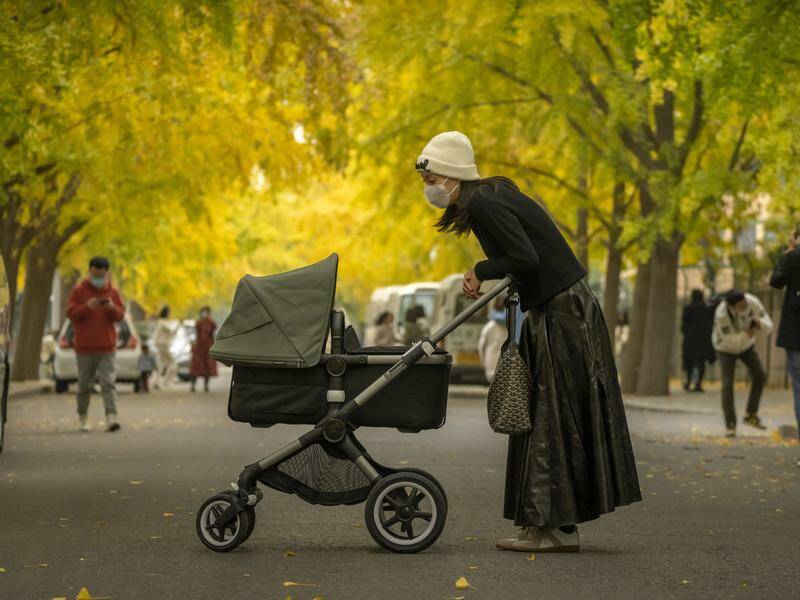
China’s population has declined for the third consecutive year in 2024, as deaths continue to outnumber a slight rise in births.
Data from the National Bureau of Statistics reveals a population drop of 1.39 million to 1.408 billion, down from 1.409 billion in 2023. Experts warn this downward trend is likely to accelerate, posing significant challenges for the world’s second-largest economy.
The shrinking working-age population is driving up elderly care costs and pension liabilities, adding pressure to already debt-laden local governments. Despite a modest increase in births—9.54 million in 2024, compared to 9.02 million in 2023—the number of deaths also fell slightly to 10.93 million, maintaining the demographic imbalance.
China’s low birth rates are rooted in historical policies like the one-child rule (1980–2015), rising urbanisation, and economic constraints. High living costs in cities, job insecurity, and gender discrimination deter younger generations from starting families. According to Yun Zhou, a sociology professor at the University of Michigan, reversing this trend will require addressing structural issues like social safety nets and gender inequality.
Authorities have implemented measures to encourage childbearing, including “marriage and love education” in universities and local government initiatives. However, challenges remain stark. The number of women of reproductive age is projected to drop below 100 million by 2100, while the elderly population is expected to exceed 400 million by 2035, potentially exhausting the pension system.
As of 2024, 22% of China’s population (310.31 million) were aged 60 or older, up from 296.97 million in 2023. Urbanisation also surged, with the urban population reaching 943.3 million, while rural numbers fell to 464.78 million.

