
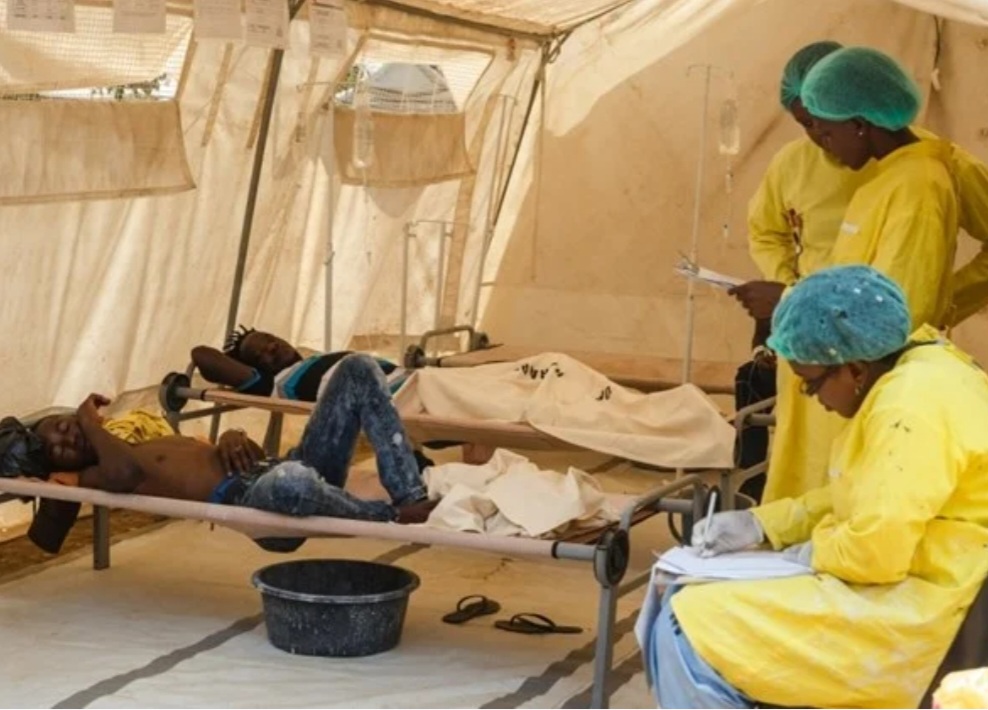
The Lagos State Government reports that deaths from the cholera outbreak have increased from 15 to 21, while infections have risen from 350 to 401.
Dr. Kemi Ogunyemi, Special Adviser to the Lagos State Governor on Health, stated that the rise in cases was expected following the large gatherings during the Eid-el Kabir celebration.
The update was provided by Tunbosun Ogunbanwo, Director of Public Affairs in the state’s Ministry of Health, on Thursday, June 20, in Lagos. According to Ogunyemi, the highest numbers of infections have been recorded in Lagos Island, Kosofe, and Eti Osa.
Ogunyemi noted that suspected cases are decreasing across local government areas (LGAs), particularly in those previously affected, due to the state government’s interventions and surveillance efforts.
She shared this update after meeting with members of the Lagos State Public Health Emergency Operations Centre (PHEOC).
“The Ministry of Health, in collaboration with the State Ministry of Environment and the Lagos State Environmental Protection Agency (LASEPA), continues to collect samples of water sources, food, and beverages to identify the source of contamination,” Ogunyemi said. “We have also intensified our surveillance activities in communities, particularly in affected LGAs, to address the situation head-on. We are working with the Ministry of Basic and Secondary Education and the Ministry of Tertiary Education to ensure all precautions are taken in our schools to protect children and scholars as they return.”
Ogunyemi urged residents to remain vigilant, practice good hand hygiene, and participate in community sanitation activities to stop the spread of cholera. She advised citizens to seek medical attention immediately if they experience symptoms such as watery diarrhea, vomiting, abdominal pain, general malaise, and fever. Cholera treatment is provided free of charge at all public health facilities.
Ogunyemi reiterated the state government’s commitment to providing quality and affordable health care to Lagos residents. She also commended local, national, and international partners—including UNICEF, WHO, NCDC, NIMR, Red Cross, and others—for their support in combating the outbreak.

