
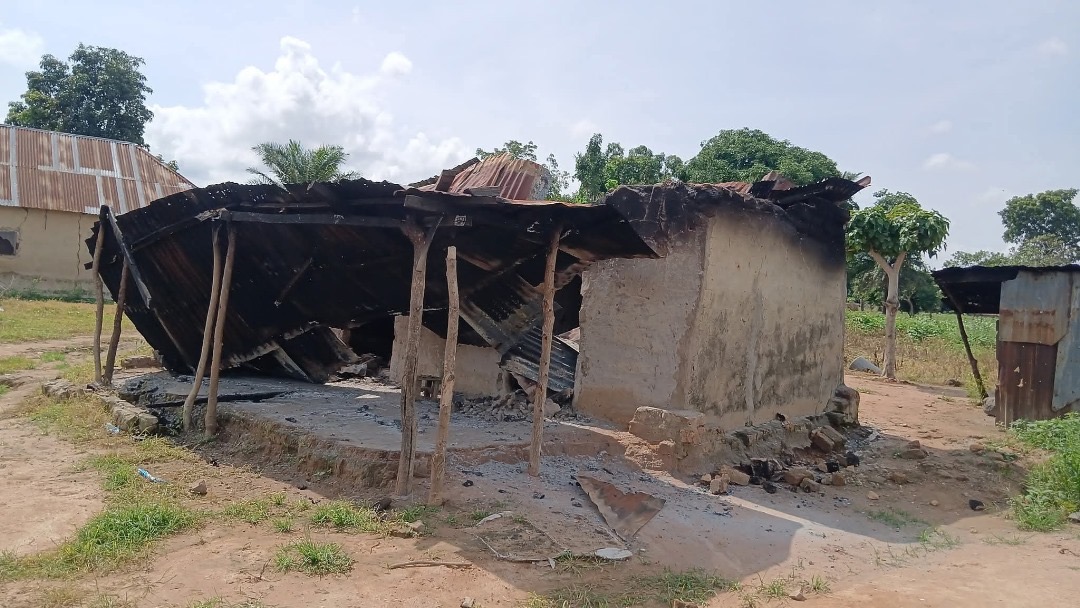
Leaders of Benue communities in the diaspora have strongly condemned the recent wave of killings in the state, describing the violence as a “silent genocide” targeting indigenous populations.
Their statement follows the June 14 massacre in Yelewata, Guma Local Government Area, where over 200 people were reportedly killed by suspected armed herders. In an open letter addressed to President Bola Tinubu, Professor Akaa D. Ayangeakaa (representing the Tiv diaspora) and Chief Edwin Ochai (representing the Idoma diaspora) cited ongoing attacks in Ukum, Apa, Otukpo, and other areas. They urged the President to take immediate and decisive action.
The letter expressed deep outrage over a statement by Mr. Bayo Onanuga, Special Adviser to the President on Information and Strategy, who referred to the killings as “reprisals” in a “farmer-herder conflict.” The diaspora groups called this description dangerous and misleading, insisting the violence amounted to coordinated acts of ethnic cleansing.
They criticised the Federal Government’s silence and inaction, highlighting the lack of adequate security measures or support for affected communities. The letter outlined a series of demands, including the deployment of federal security forces, prosecution of the perpetrators, and the resettlement of displaced people. They also called for a full investigation into the Yelewata killings and warned that continued neglect could further destabilise the region.
In their words:
“Over the past few months, towns and villages across Benue State have faced brutal, planned attacks. In May, over 70 civilians were slaughtered in Gbagir, Ukum LGA. Then on June 14, more than 200 were murdered in Yelewata, Guma LGA. These were not random casualties of conflict — they were executions. Families wiped out, homes destroyed, and survivors left with unhealed trauma.”
The letter went on to cite similar tragedies in Otukpo, Apa, Agatu, Gwer West, Logo, and other LGAs, painting a picture of a state under siege. Despite this, the federal response has been minimal, with no high-level visits, arrests, or meaningful intervention.
“These are not isolated incidents. This is a systematic campaign of violence aimed at displacing indigenous people. Humanitarian agencies report over 2 million internally displaced persons (IDPs) in Benue. Yet the federal government remains silent.”
The letter strongly rejected Onanuga’s characterisation of the crisis and posed powerful questions:
“Was the 7-month-old baby who was hacked and burned alive also a farmer? Were the infants killed while clinging to their mothers part of a ‘farmers-herders conflict’? This is not a clash — this is terrorism. This is ethnic cleansing.”
The groups also criticised President Tinubu’s directive to initiate reconciliation meetings, insisting that there is no war between Benue communities and Fulani herders:
“The people of Benue are not at war. These attacks come without warning. There’s no one to reconcile with — only murderers who vanish into the night. Calling for reconciliation without justice emboldens impunity.”
They accused the Federal Government of failing in its constitutional duty to protect its citizens and called on the President to acknowledge the atrocities for what they are: acts of terror and crimes against humanity. The letter also warned of the national consequences of ignoring the crisis in Benue, known as the “food basket” of Nigeria.
They issued several demands, including:
-
Public condemnation of the massacres and recognition of the violence as ethnic cleansing.
-
Deployment of federal security forces to vulnerable communities.
-
An independent investigation into military inaction and complicity.
-
A comprehensive resettlement and rehabilitation plan for IDPs.
-
A clear strategy to recover illegally occupied lands.
-
Direct engagement between the Federal Government and Benue leaders—not reconciliation between unequals.
The signatories closed with an emotional appeal:
“The people of Benue are not asking for favours. We demand our right to life, security, and dignity. If these massacres had occurred in Sokoto, Kano, or Maiduguri, the response would have been swift. In Benue, there has been silence and harmful misrepresentation.”
“Mr. President, the nation and history are watching. Let this not be remembered as the time when a Nigerian President turned away. Let this be remembered as the moment when justice and leadership prevailed.”

