
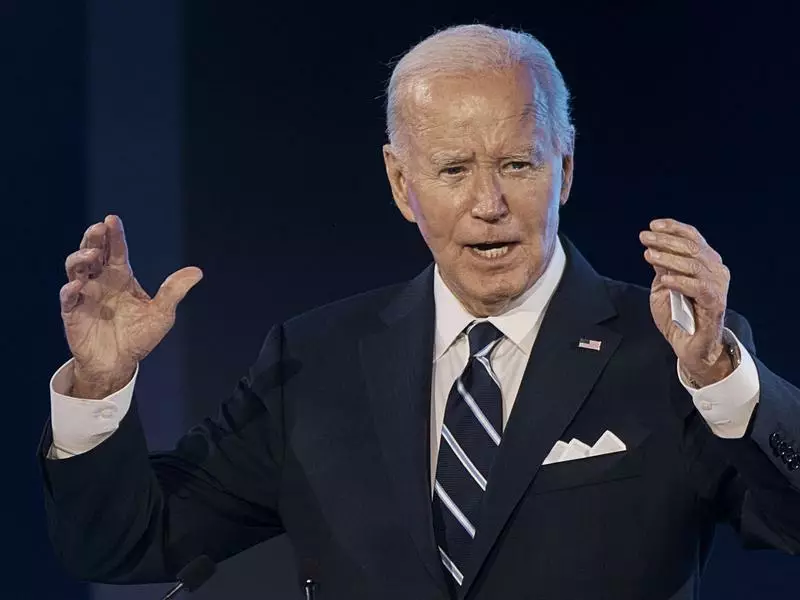
With just four months remaining in his term, U.S. President Joe Biden will address world leaders at the U.N. General Assembly on Tuesday, September 24, amid ongoing conflicts in Ukraine, Gaza, and the potential emergence of a new front in Lebanon.
His speech follows the Pentagon’s announcement on Monday to deploy a small number of additional troops to the Middle East as a precautionary measure.
Biden’s presidency has been marked by significant foreign policy challenges, including Russia’s invasion of Ukraine in February 2022 and the Hamas attack in southern Israel on October 7, which triggered a subsequent Israeli offensive in Gaza.
A senior U.S. administration official stated that Biden’s address will allow him to highlight what he considers key accomplishments during his time in office. It will also serve as a platform to urge the international community to support Ukraine and seek a diplomatic resolution in the Middle East.
White House Press Secretary Karine Jean-Pierre informed reporters during the Air Force One flight to New York that Biden will outline his “vision for how the world should come together to resolve these major issues and defend fundamental principles such as the U.N. Charter.”
Biden is set to discuss a new peace plan with Ukrainian President Volodymyr Zelenskiy when they meet in Washington on Thursday. A U.S. official indicated that the plan likely resembles earlier proposals that emphasize increased military aid and support for Ukraine.
“We support Ukraine’s pursuit of a just, lasting, and comprehensive peace to this war. The president is committed to equipping the Ukrainian military with the resources they need to strengthen their position,” Jean-Pierre stated.
Biden’s speech at the U.N. will be the highlight of a two-day visit to New York, which includes a climate speech later on Tuesday and a meeting on Wednesday with Vietnamese President To Lam.
The challenges posed by Ukraine, Russia, Gaza, Iran, and China will likely remain pressing issues for the next president, whether that be Biden’s vice president, Kamala Harris, a Democrat, or former President Donald Trump, a Republican.

