
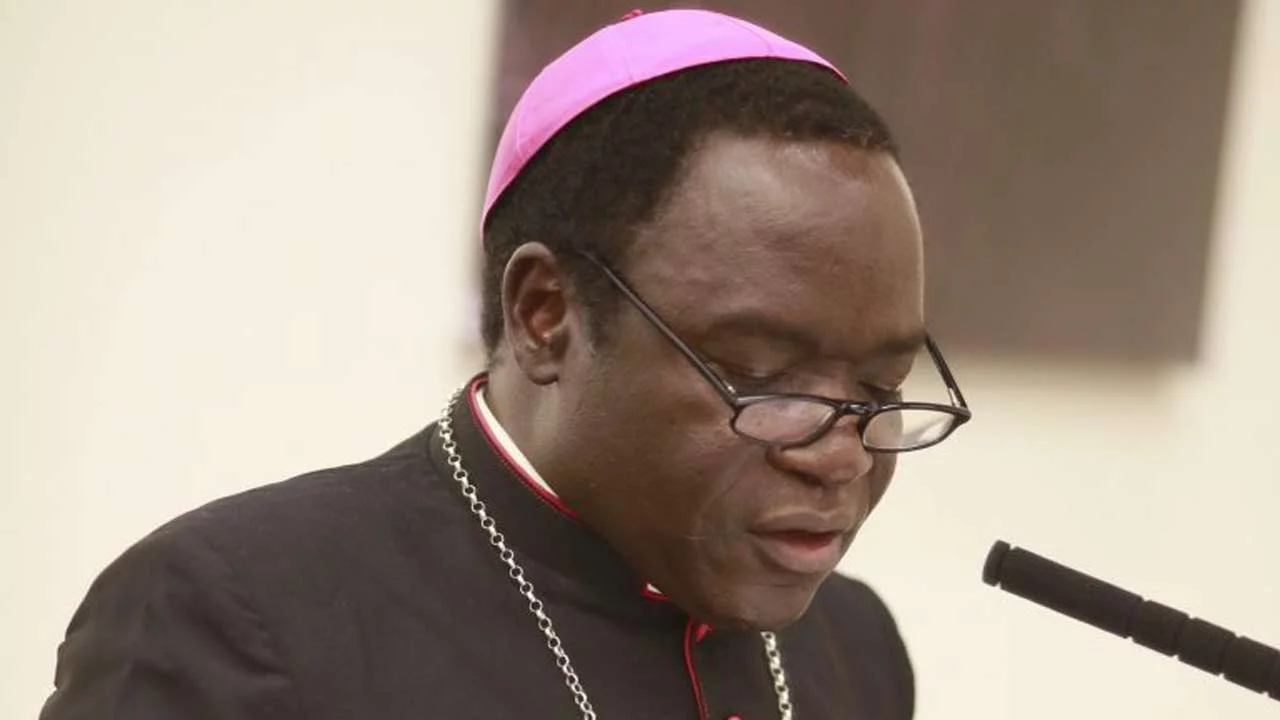
Bishop Matthew Kukah of the Roman Catholic Diocese of Sokoto has fervently condemned the ongoing persecution of Christians in Northern Nigeria, expressing grave concern over the lack of accountability for those responsible for attacks on the Christian community.
During a virtual address at the Silver Jubilee Anniversary of the Order of the Knights of St. Mulumba Nigeria Eko Subordinate Council in Lagos, Bishop Kukah lamented the absence of justice for the numerous violent incidents against Christians in the region, noting that no one has been prosecuted for these crimes.
Kukah highlighted the alarming trend of impunity, where attacks on Christians, including the burning of churches and destruction of Christian properties, go unpunished. He cited specific examples, such as the public slaughter of a pastor in Adamawa and the killings of priests in Benue and Kaduna, emphasizing the climate of fear and discrimination Christians face in the North.
The bishop also criticized the ethnic and religious polarization affecting the Christian faith in Nigeria, calling for a unified and inclusive approach to Christianity across the country. He urged Christians to rise above ethnic divisions and view the suffering of Christians in any part of Nigeria as a collective concern.
Kukah’s remarks follow numerous incidents where Christians have been denied the right to build churches or have been subjected to violence without any legal consequences. He stressed that the challenges facing Christians in Nigeria today require courage and resilience, invoking martyrdom as a symbol of the daily struggles believers endure.
Despite the risks, Bishop Kukah reaffirmed his commitment to his ministry in Sokoto, underscoring his belief that the Christian mission must continue in the face of adversity.
He stated:
“If you look at our country—Nigeria, the issue is that, in Northern Nigeria, Christians are among the groups you can kill without consequences. You can ask yourself, has anybody ever been charged for burning churches or destroying Christian properties? A pastor was slaughtered openly in Adamawa. Priests were killed in Benue. Priests have been killed in Kaduna.
“It seems as if killing Christians is the only crime that goes unpunished. If we are serious as Christians, as Catholics, what happens to the church in Ikwerre, Sokoto, Onitsha, or anywhere in this country should affect us all. Tragically, Christianity has become largely subordinated to ethnicity.
“Many people still hold a caliphate mentality, believing that those who are not part of us must be against us. This is the reality for Christians and Christianity in many parts of Northern Nigeria today, where Christianity is merely tolerated. Christians are being denied land to build churches, and this is not seen as a problem. In places like Kenya, I am dealing with a similar issue right now.
“We must preach the gospel, whether it is welcome or unwelcome. Preaching the gospel has no political or ethnic boundaries. It is not about friendship. If it were, Jesus would have said to Peter, ‘Get behind me.’ When confronted, martyrdom is not just about being killed. In the end, you are killed for speaking the truth. I remember during the days of Abacha, many people used to say to me, ‘Oh Bishop, if you don’t keep quiet, you will be killed for nothing.’
“I say this because we need to come to terms with the fact that every day of our lives as Christians, we are challenged to martyrdom. Martyrdom because a sword is dangling before us. Martyrdom because we live in a country, a society, a world that is so morally broken that the question of what is right and what is wrong has been distorted by the circumstances in which we find ourselves. When martyrdom comes to us, we embrace it; we do not retreat.
“The challenge, therefore, is for us to confront these realities and address them. Here in Sokoto, for example, I have lost a seminarian, I have lost a priest, my priests have been kidnapped, not once, not twice. But my immediate reaction is that in all of this, we are only inspired. People look at me and say, ‘Why are you going back to Sokoto?’ I remember when Deborah was killed, I was out of Sokoto. People were asking me, ‘How are you going back to Sokoto?’ When my seminarian, my priest, was kidnapped and released last month, people asked if I was still going back to Sokoto.”

