
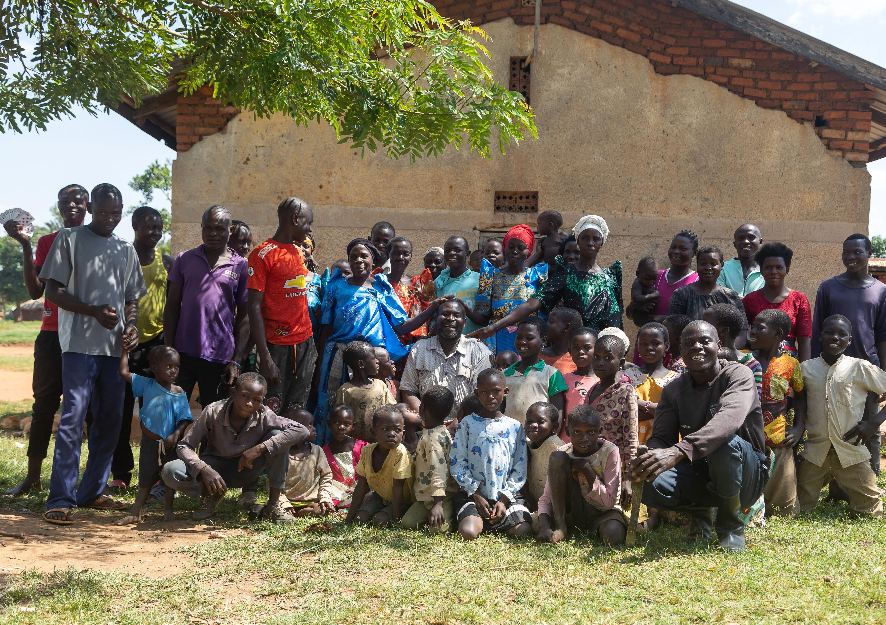
Musa Hasahya Kasera, a 68-year-old Ugandan man, finds himself overwhelmed by anxiety and sleepless nights, contemplating the future of his extensive family. With 12 wives, 102 children, and around 578 grandchildren, Hasahya’s home has become a local and international attraction, drawing tourists and media alike.
Hasahya’s children range in age from 10 to 50, while his youngest wife is under 40. Struggling to recall the names of his wives, children, and grandchildren, he relies heavily on his 30-year-old son, Shaban Magino, a school teacher, for support. The burden of providing for his large family weighs heavily on Hasahya, who could only afford to educate a few of his children at the basic level. “Apart from my first and last child, I struggle to remember the names of the others; it’s the mothers who help me identify them,” he shared.
Once a farmer in his youth, Hasahya is now unemployed and faces failing health and a diminishing income, which hinder his ability to meet his family’s needs. “Due to my deteriorating health, less than 1 hectare of land, and my inability to continue farming, two of my wives left because of a lack of basic necessities like food, education, and clothing. I sent my wives to learn about family planning; they are now using contraceptives, but I don’t,” he explained.
Hasahya has decided against having more children due to limited resources, stating, “I have learned from my mistakes and irresponsible lifestyle of having many wives and children who I am unable to care for adequately.”
The large family resides together in a rundown 12-bedroom house in Bugisa Village, Butaleja District, a remote area of Lusaka, Uganda. Hasahya married his first wife, Hanifa, in 1972 according to the traditional rites of his ethnic community. A year later, Hanifa gave birth to their first child, Sandra Nabewire, prompting Hasahya to leave school and find ways to provide for his growing family.
“Unlike my parents, who had only two children, my relatives advised me to marry more wives and have more children to expand our family,” Hasahya recalled. In his earlier years, he was a successful businessman and respected community leader. With substantial wealth, including money, land, and cattle, Hasahya’s status attracted many people, and villagers offered their daughters to him for marriage, including some under the age of 18.
With ample resources, Hasahya chose to marry more women and expand his family. “We have fertile soil, so I provided farming tools like hoes for each wife to cultivate the land and produce enough food for the family. However, over the years, my income has decreased while my family size has increased, and the rising cost of living in the country hasn’t helped.”
The years of marriages and births have eroded the family’s fortunes, leading Hasahya to seek government assistance to educate his children and meet other needs. Hanifa, his first wife, describes Hasahya as a caring man who listens to everyone before making decisions and treats all equally.
While Uganda banned child marriage in 1995, the country still permits polygamy under certain religious and traditional customs. Bugisa, where Hasahya is from, is primarily a farming community where residents are involved in cattle rearing and subsistence farming of crops like cassava, rice, maize, and coffee.
Hasahya’s wives and adult children often engage in menial jobs like fetching water, gathering firewood, sweeping, plaiting hair, and other domestic chores to support the family. Meanwhile, the men often spend their time playing card games under the shade of trees in the family compound.
Despite the challenges, Hasahya notes that aside from the two wives who left, the others remain loyal because they love him and are content. He advises anyone considering marrying multiple wives to reconsider, given the challenges and responsibilities involved.

