

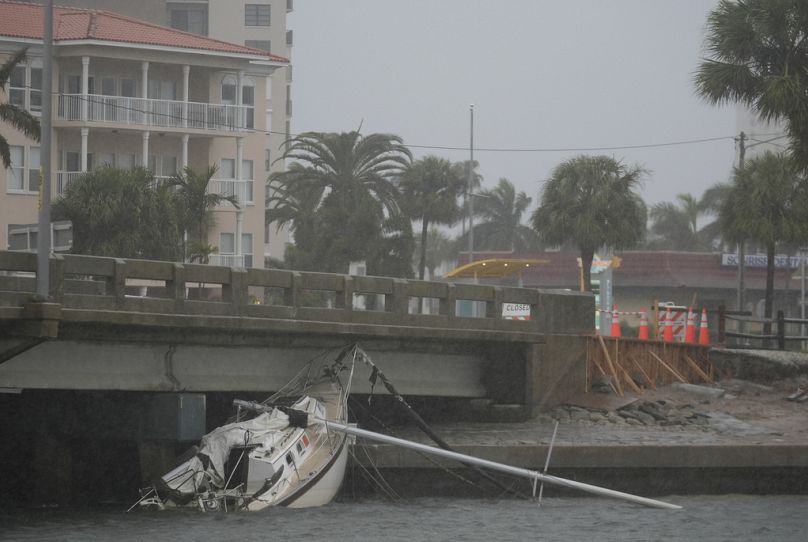
Hurricane Milton tore into Florida as a Category 3 storm, battering a coast still reeling from the aftermath of Hurricane Helene. With winds exceeding 100 mph (160 kph), the storm pummelled cities and unleashed multiple tornadoes, though Tampa was spared a direct hit.
The storm veered south in its final hours, making landfall Wednesday night in Siesta Key near Sarasota, about 70 miles (112 kilometres) south of Tampa. Despite this, the Tampa area remained in a state of emergency as St. Petersburg recorded over 16 inches (41 centimetres) of rain. The National Weather Service issued flash flood warnings for western and central Florida.
Tropicana Field, home to the Tampa Bay Rays in St. Petersburg, suffered significant damage. The fabric roof of the domed stadium was shredded by strong winds, though it was unclear if the interior sustained any harm. Additionally, multiple cranes were toppled during the storm, according to the weather service.
St. Petersburg residents also faced a water crisis after a water main break forced the city to shut down household tap water service.
Power outages swept across Florida, with over 3 million homes and businesses without electricity as of early Thursday, according to poweroutage.us, which monitors utility reports.
Before Milton even made landfall, tornadoes were touching down across the state. The Spanish Lakes Country Club near Fort Pierce, on Florida’s Atlantic Coast, was hit particularly hard, with homes destroyed and some residents killed.
“We have lost some life,” St. Lucie County Sheriff Keith Pearson told WPBF News, though he wouldn’t say how many people were killed.
About 125 homes were destroyed before the hurricane came ashore, many of them mobile homes in communities for senior citizens, said Kevin Guthrie, the director of the Florida Division of Emergency Management.
About 90 minutes after making landfall, Milton was downgraded to a Category 2 storm. By early Thursday, the hurricane was a Category 1 storm with maximum sustained winds of about 85 mph (135 kph) as it moved offshore and was about 35 miles (55 kilometres) east of Orlando.
Heavy rains were also likely to cause flooding inland along rivers and lakes as Milton traverses the Florida Peninsula as a hurricane, eventually to emerge in the Atlantic Ocean on Thursday. It is expected to impact the heavily populated Orlando area.
The storm slammed into a region still reeling two weeks after Hurricane Helene flooded streets and homes in western Florida and left at least 230 people dead across the South. In many places along the coast, municipalities raced to collect and dispose of debris before Milton’s winds and storm surge could toss it around and compound any damage.
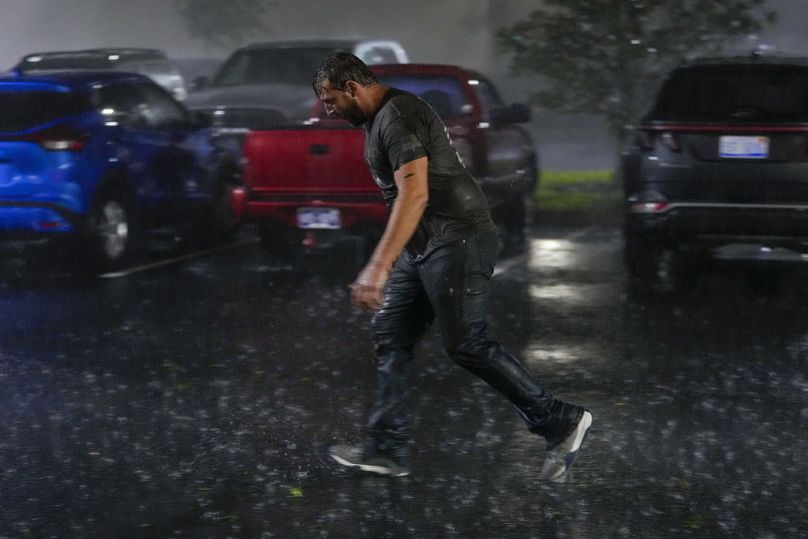
Officials issued stark warnings, urging residents to evacuate or face grim survival odds.
“This is it, folks,” said Cathie Perkins, emergency management director for Pinellas County, located on the peninsula that forms Tampa Bay. “Those of you hit hard by Hurricane Helene, this is going to be a knockout. You need to get out, and you need to get out now.”
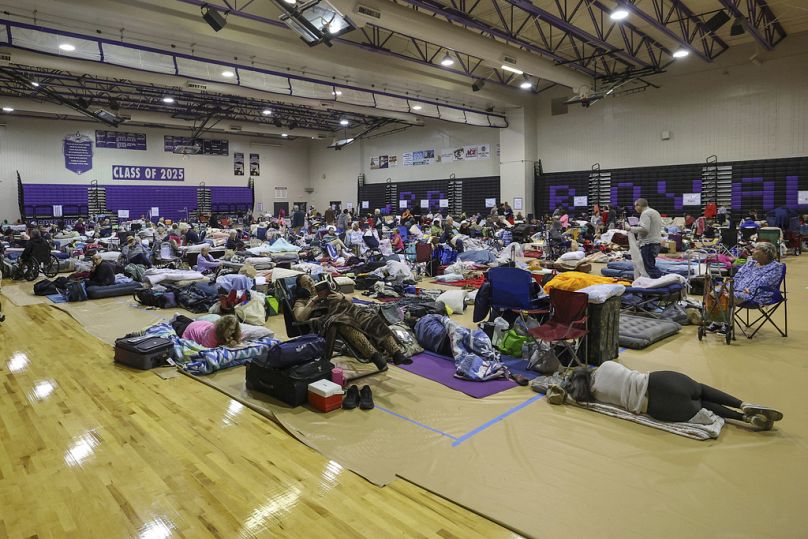
By late afternoon, some officials indicated that it was too late for evacuations, advising those who stayed behind to hunker down. By evening, several counties announced they had suspended emergency services.
Jackie Curnick, living in Sarasota just north of the storm’s landfall, struggled with the decision to stay. With a two-year-old son and a baby girl due on October 29, she and her husband believed staying was the best option. They began packing to evacuate on Monday but couldn’t find affordable hotel rooms.
“We had too many uncertainties about leaving,” Curnick said, citing concerns over finding a place to sleep, refueling their car, and whether they could even find a safe route out of the state. “It’s tough to evacuate on a peninsula. In most states, you can head in any direction, but in Florida, there are only so many roads going north or south.”
During a press conference in Tallahassee, Governor Ron DeSantis outlined the state’s extensive preparations, which included 9,000 National Guard members from Florida and other states, over 50,000 utility workers from as far as California, and highway patrol escorts for gasoline tankers to ensure fuel availability for evacuees.
“Unfortunately, fatalities are inevitable. There’s no way around it,” Governor Ron DeSantis said.
Heavy rain and tornadoes began battering parts of southern Florida on Wednesday morning, with conditions worsening throughout the day. Rainfall totals of 6 to 12 inches (15 to 31 centimetres) were expected inland, with some areas receiving up to 18 inches (46 centimetres), raising the risk of catastrophic flooding.
One tornado touched down in the Everglades, crossing Interstate 75, while another hit Fort Myers, snapping tree branches and shredding the canopy of a gas station.
Mandatory evacuation orders were issued across 15 counties, affecting approximately 7.2 million people. Authorities warned that anyone choosing to stay behind would have to fend for themselves, as first responders wouldn’t risk their lives during the storm’s peak.
St. Petersburg Mayor Ken Welch cautioned residents to brace for extended power outages and possible sewer system shutdowns.
In Charlotte Harbor, about 100 miles (160 kilometres) south of Tampa, Josh Parks packed his car with essentials. His neighbourhood was still dealing with the aftermath of Hurricane Helene, which had left streets filled with waterlogged furniture and debris. Planning to evacuate to his daughter’s home inland, Parks said, “I told my roommate to pack like you’re not coming back.”
By early afternoon, about 1,900 flights had been cancelled, and attractions like SeaWorld, Walt Disney World, and Universal Orlando had shut down. Gas shortages also hit the Tampa and St. Petersburg areas, with over 60% of stations out of fuel. However, DeSantis reassured that the state’s overall supply was stable, with highway patrol escorting fuel tankers to restock stations.
Meanwhile, Christian Burke and his mother decided to stay in their three-story concrete home in Gulfport, designed by his father with a Category 5 hurricane in mind. Although police urged them to evacuate, Burke admitted, “Staying here isn’t the best idea, and I’m not taking this storm lightly.”

