
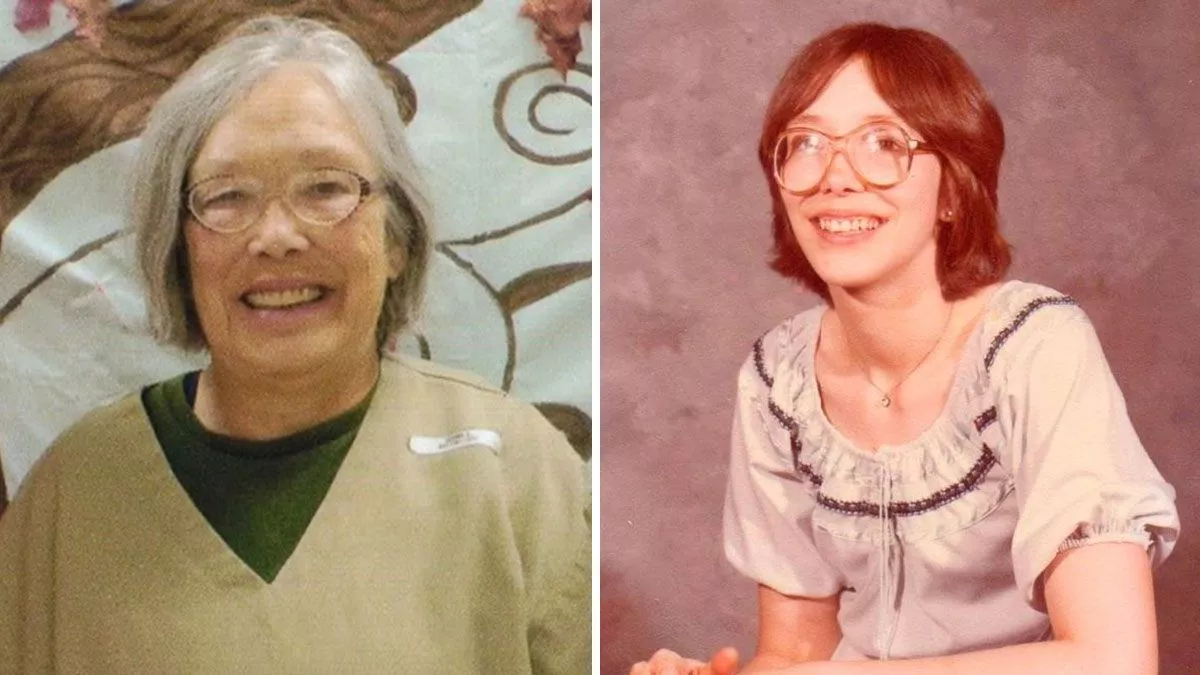
A woman who spent over forty years in prison in the US for murder has been declared innocent.
Sandra ‘Sandy’ Hemme, 63, was sentenced to life imprisonment for the killing of 31-year-old Patricia Jeschke in 1980. However, following revelations by her attorneys that the crime was likely committed by a now-discredited police officer who died in 2015, her conviction was overturned by a judge. She will now either be released or retried within the next 30 days.

Sandra ‘Sandy’ Hemme, 63, had her life turned upside down after being arrested and sedated by St. Joseph police officers. While under the influence of medication intended to treat her psychotic break, Hemme made statements to other officers that inadvertently incriminated herself. Judge Ryan Horsman criticized the police for taking advantage of her mental illness and coercing her into making false statements, even threatening her with the death penalty.
“The only evidence linking Ms. Hemme to the crime were her own inconsistent and disproven statements, made while she was in psychiatric crisis and physical pain,” Judge Horsman stated in his order overturning her conviction. He contrasted this with the compelling new evidence presented by Hemme’s attorneys in February 2023, which directly implicated former police officer Michael Holman in the crime.
Horsman highlighted that prosecutors had failed to disclose this crucial evidence at the time, which he believed could have significantly aided Hemme’s defense. He also criticized her trial counsel, stating they fell short of professional standards, leading to a miscarriage of justice.
The police officer in question, Michael Holman, was fired from the St. Joseph force in 2015 for filing a false report claiming his truck was stolen and collecting an insurance payout shortly after the murder of Patricia Jeschke, a local librarian. Holman’s truck had been spotted near the crime scene, and he was seen attempting to use Jeschke’s credit card on the day her body was found. He provided an alibi that he spent the night with a woman at a nearby motel, though this could not be verified.
In a subsequent raid of Holman’s home, officers discovered gold horseshoe-shaped earrings and other stolen jewelry. Jeschke’s father recognized the earrings as belonging to his daughter, but the investigation into Holman abruptly ended.
Officials acknowledged that many of these details surfaced later and were never disclosed to Hemme’s attorneys, highlighting a grave miscarriage of justice more than four decades after the case began.
The incident began on November 13, 1980, when Jeschke failed to report for work. Her mother discovered her body in her apartment, bound and surrounded by blood, with a knife left nearby.
Hemme, who had been discharged from a mental hospital the day before Jeschke’s murder, came under suspicion two weeks later when she showed up at a nurse’s house carrying a knife and refusing to leave. Police found her hiding in a closet and returned her to St. Joseph’s Hospital, where she became a suspect.
Citing her recent hospitalizations and mental state, police interrogated Hemme while she was under the influence of antipsychotic drugs. Her attorneys argued that these interrogations occurred amid a long history of mental health issues that began when she was 12 years old.
“Each time the police obtained a statement from Ms. Hemme, it changed dramatically and included details the police had only recently uncovered,” her attorneys noted.
Hemme eventually claimed she witnessed a man named Joseph Wabski commit the murder, but this accusation fell apart when Wabski’s alibi proved he was at an alcohol treatment center in Topeka at the time of the crime. Despite this, Hemme was charged with capital murder while Holman avoided serious consequences, being only fired from the force.
While awaiting trial, Hemme wrote to her parents on Christmas Day 1980, expressing her frustration and resignation. She eventually agreed to plead guilty to capital murder in exchange for removing the death penalty from consideration.
Hemme’s attorneys brought these oversights to light, prompting the Missouri Court of Appeals to hold an evidentiary hearing in January 2024. Former detective Steven Fueston testified during the three-day hearing, stating he had halted one of Hemme’s police interviews because she appeared disoriented.
Judge Horsman delivered his verdict on Friday, criticizing the department’s handling of the case and agreeing with local judge Larry Harman’s belief in Hemme’s innocence. Harman lamented that the system had repeatedly failed her.

