
Nigerians return home xenophobia concerns continue to grow as rising unrest in South Africa forces many citizens to consider leaving the country permanently. In response to the worsening situation, the Nigerian Consulate, in collaboration with the Nigerian Citizens Association in South Africa (NICASA), has introduced a free repatriation flight for Nigerians willing to return home.
The initiative comes at a time when fear and uncertainty have taken over many Nigerian communities across major South African cities. According to NICASA President, Frank Onyekwelu, numerous Nigerians have already shut down their businesses due to ongoing threats and instability. While there is no structured financial support system in place, the repatriation option is offering a lifeline to those seeking safety.
Reports indicate that several Nigerians have begun registering for the return programme, highlighting the severity of the situation. Many residents have shared distressing experiences, explaining how they are now forced to stay indoors while living in constant fear of targeted attacks.
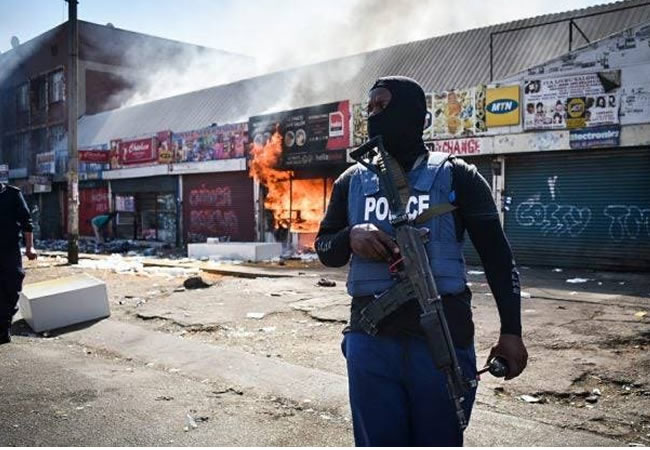
Violent anti-foreigner protests have spread across cities including Pretoria, Johannesburg, Durban, and East London. These protests have resulted in harassment, looting, destruction of property, and physical assaults, particularly targeting foreign nationals.
Groups such as Operation Dudula have been linked to the demonstrations, often citing concerns over illegal immigration and unemployment. However, the consequences have been severe for migrants, especially Nigerians, Ghanaians, and other African nationals who now face hostility and discrimination.
Tragically, the violence has claimed lives. The Nigerian Consulate confirmed the deaths of Amaramiro Emmanuel and Ekpenyong Andrew in separate incidents linked to the unrest. These developments have further intensified fear within the diaspora community.
In addition, another foreign national was reportedly killed in downtown Johannesburg, raising fresh concerns about public safety. Authorities have yet to make arrests in connection with the incident, despite ongoing investigations.
As tensions rise, Nigerian business owners are counting heavy losses. Shops and commercial outlets owned by foreigners have become primary targets, forcing many to shut down operations. The situation has disrupted livelihoods and increased economic hardship among affected individuals.
The phrase Nigerians return home xenophobia now reflects a growing reality, as more citizens weigh the risks of staying against the need for safety. While South African authorities have condemned the violence, many Nigerians remain uncertain about their future in the country.
The situation on the ground continues to reveal the harsh realities faced by Nigerians and other foreign nationals. A trader in Johannesburg, Yemisi Adewale, described how protesters have been deliberately targeting foreign-owned businesses, particularly those run by Nigerians and Ghanaians.
According to her, the attacks are not random but coordinated efforts aimed at looting and destruction. She explained that despite the presence of security forces, the violence has persisted, leaving many traders vulnerable. In one instance, she narrowly escaped an attack at a local market after being forced to abandon her goods while fleeing for safety.
She stressed that the ongoing unrest has made it nearly impossible to operate businesses, as any visible activity immediately attracts attackers. As a result, many shop owners have chosen to shut down completely in a bid to protect their lives.
The economic impact has been severe. Traders say their businesses, which serve as their primary source of income, have suffered major setbacks. Continued disruptions could push many into financial ruin if the situation does not improve. Despite the tension, many Nigerians have remained calm, avoiding confrontation even in the face of repeated provocation.
Another trader, who chose to remain anonymous, described the situation as organised violence disguised as protest. She recounted how large groups of individuals armed with sticks and clubs have been moving through markets, targeting anyone identified as a foreigner. According to her, fear has spread across the business community, forcing a complete shutdown of operations.
She added that hundreds of shops owned by foreigners have already been looted, leaving many with no choice but to stay indoors. The attacks, she claimed, appear to be specifically directed at Nigerians, with the intention of pushing them out of business entirely.
Meanwhile, diaspora leaders have pointed out that the worst-hit areas are informal settlements, where small-scale traders operate. The President of Ohanaeze Ndigbo in South Africa, ABC Okokoh, explained that many affected individuals rely on petty trading for survival, making the disruption particularly devastating.
He noted that while some parts of South Africa remain relatively calm, those in high-risk areas have been forced to stay indoors. He also suggested that certain groups may be taking advantage of the unrest for political reasons, while authorities are treading carefully to avoid escalating tensions further.
Similarly, the President of the Association of Yorubas in Diaspora in South Africa, Olusola Agbeniyi, stated that although tensions are high, not all reported incidents are directly linked to the protests. He added that security presence in some areas has helped to limit the spread of violence.
In response to the crisis, the Nigerians in Diaspora Commission confirmed that the matter has been escalated to higher authorities. According to its spokesperson, Abdur-Rahman Balogun, discussions are ongoing between Nigerian officials and South African authorities.
The Minister of Foreign Affairs, Bianca Odumegwu-Ojukwu, is reportedly engaging with relevant stakeholders as efforts continue to address the situation and ensure the safety of Nigerians abroad.

