
The government of Equatorial Guinea has restricted its citizens from downloading and sharing multimedia files on WhatsApp when using mobile data.
This move follows guidelines issued to telecommunications operators, urging them to implement measures that limit access to inappropriate content.
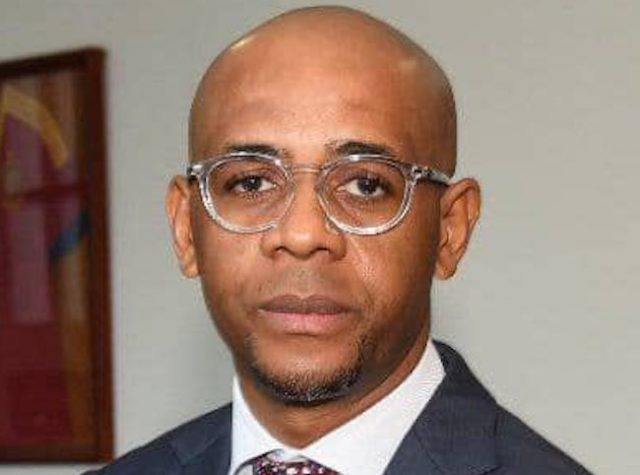
Baltasar Engonga, Director General of the National Financial Investigation Agency, was recently implicated in a scandal involving the wives of prominent figures.
The scandal surfaced during a fraud investigation targeting the 54-year-old economist, leading to an unplanned search of his home and office by ANIF officials. During the search, several CDs were discovered, revealing numerous encounters with married women.
Reportedly, over 400 videos include encounters with high-profile individuals, such as his brother’s wife, his cousin, the sister of Equatorial Guinea’s President, the wife of the Director General of Police, and about 20 ministers’ wives, among others.
The footage, found in his office, is said to have been recorded with consent and has since been leaked online, sparking a media frenzy.
On Tuesday, local news platform Ahora EG reported that citizens are frustrated with their inability to share photos, videos, and audio on mobile data, now relying solely on WiFi for these functions.
In an interview, a source expressed concern, stating, “Should an entire country suffer for the actions of a few? Restricting access to essential communication seems excessive and unfair, affecting thousands who rely on these platforms not only for entertainment but also for work and education.”
“In an increasingly digital world, should we shut down our platforms and stall our activities due to the actions of a few? Currently, users are forced to depend on WiFi connections, which limits their communication and interferes with daily tasks.”
The report added that this restriction has sparked heated debate, with many seeing it as a form of control rather than a measure to support communication. Another individual questioned, “Is it fair for everyone to bear the consequences of a few people’s actions? Authorities have not yet provided any explanation for this restriction or its expected duration. At a time when communication is crucial, the lack of transparency only adds to citizens’ concerns.”
Previously, Vice President Teddy Nguema announced plans to install surveillance cameras in all state offices, part of ongoing efforts to enforce public service laws and address misconduct among officials.

