
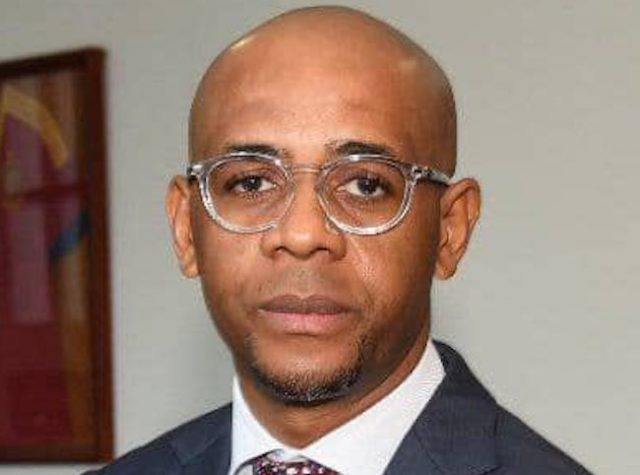
The Vice President of Equatorial Guinea, Teddy Nguema, has announced plans to install surveillance cameras in all state office buildings.
This comprehensive measure aims to enforce strict adherence to public service laws and address misconduct among officials.
Recently, the Director General of the National Financial Investigation Agency in Equatorial Guinea, Baltasar Engonga, was arrested for allegedly recording over 400 intimate videos involving the wives of prominent individuals in the country.
This scandal emerged during a fraud investigation involving the 54-year-old economist. In a surprise search of his home and office, officials discovered multiple CDs that exposed his relationships with several married women.
The CCTV initiative, unveiled in a social media post on Tuesday, highlights the administration’s commitment to transparency and accountability.
“We have taken this measure to ensure compliance with the law on public officials and to eradicate improper and illicit behaviour,” the statement read.
The new surveillance policy is intended to deter actions that could erode public trust and the ethical standards expected of government employees.
Authorities have emphasized that any misconduct caught on camera will lead to serious consequences.
“We will not tolerate any behaviour that undermines the integrity of our administration, and those involved in such practices will face severe actions,” the statement continued.
While the government stresses that this step is essential for creating a culture of accountability, the policy has sparked mixed reactions from public employees and human rights groups.
Some officials see it as a positive step toward reform, while others express concerns about potential privacy issues. The exact timeline for the rollout and the specific scope of surveillance have not been provided.
However, the government assures that the initiative aligns with existing legal frameworks focused on enhancing governance and protecting public resources.
The Vice President stated that the installation of surveillance systems in state offices represents a firm stance against corruption and misconduct, marking a significant step towards fostering transparency and trust within public service.
“The government will soon implement the installation of surveillance cameras in all offices of state bodies. We have taken this measure to ensure compliance with the law on public officials and to eradicate improper and illicit behaviour. We will not tolerate any actions that tarnish the integrity of our administration, and those who engage in such practices will face severe repercussions,” read the translated post.
Earlier, the Vice President announced that the government will immediately suspend any officials involved in inappropriate conduct within ministry offices, as it violates the Code of Conduct and Public Ethics Law.
This decisive action underscores a zero-tolerance policy toward behaviour that compromises public service integrity.
“Today, we will proceed with the immediate suspension of all officials who have engaged in inappropriate conduct in the offices of the country’s ministries.
“The government will impose severe penalties for these actions, as they represent a blatant violation of the Code of Conduct and Public Ethics Law.
“This action is a critical step in our zero-tolerance policy toward behaviours that undermine the integrity of public service.
“Ethics and respect are essential in our administration, and we will not allow irresponsible actions to erode public trust.
“Responsibility and professionalism must be the foundation of our work as servants of the state.”

