
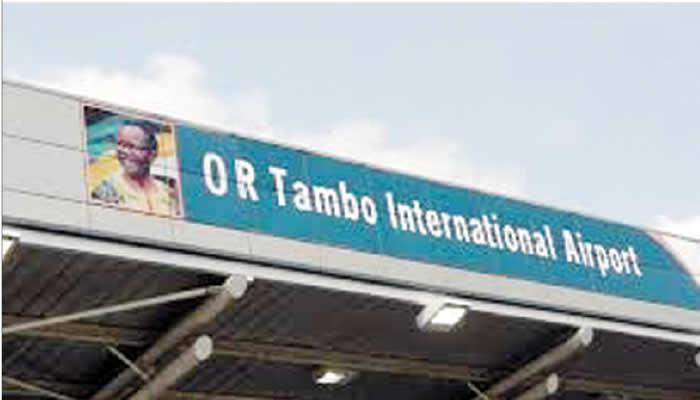
A 55-year-old Nigerian man has been arrested at OR Tambo International Airport in South Africa for drug trafficking after arriving from São Paulo, Brazil.
According to The South African, a local news outlet, the suspect was intercepted by police at the airport. A medical X-ray later revealed that he had swallowed multiple drug bullets filled with cocaine.
Confirming the arrest, Gauteng police spokesperson Amanda van Wyk stated, “The suspect, who is still releasing bullets, is expected to appear before the Kempton Park Magistrates’ Court this week.” Authorities are closely monitoring his condition as they await the complete expulsion of the illicit substances.
During a strategic planning session on transnational organised crime in Pretoria, National Police Commissioner General Fannie Masemola addressed the growing trend of drug mule arrests at OR Tambo International Airport. “Since 2024, we have arrested about 20 drug mules at the OR Tambo International Airport,” Masemola revealed.
He also recalled a recent case where two South African nationals were caught with cocaine worth R7.5 million. In another incident in December 2024, police arrested a Brazilian national carrying over 4 kg of cocaine in his luggage, while a separate drug mule was found to have swallowed 15 cocaine bullets.
Masemola further detailed the arrest of a 43-year-old Paraguayan drug mule that same month, stating, “She was taken to a local hospital where a medical X-ray revealed the presence of foreign objects in her stomach. A total of 33 drug bullets containing cocaine were subsequently released.”
These arrests are part of an intensified crackdown on international drug trafficking.
Beyond airport operations, South African authorities have also conducted major drug seizures at ports. Masemola highlighted a recent intelligence-led operation at Durban Harbour, which involved international collaboration over two months.
“The culmination of which was the recovery of cocaine hidden and transported in paint containers. The containers were from Brazil and destined for South Africa, where they would then be transported to Gauteng for distribution,” he explained.

