
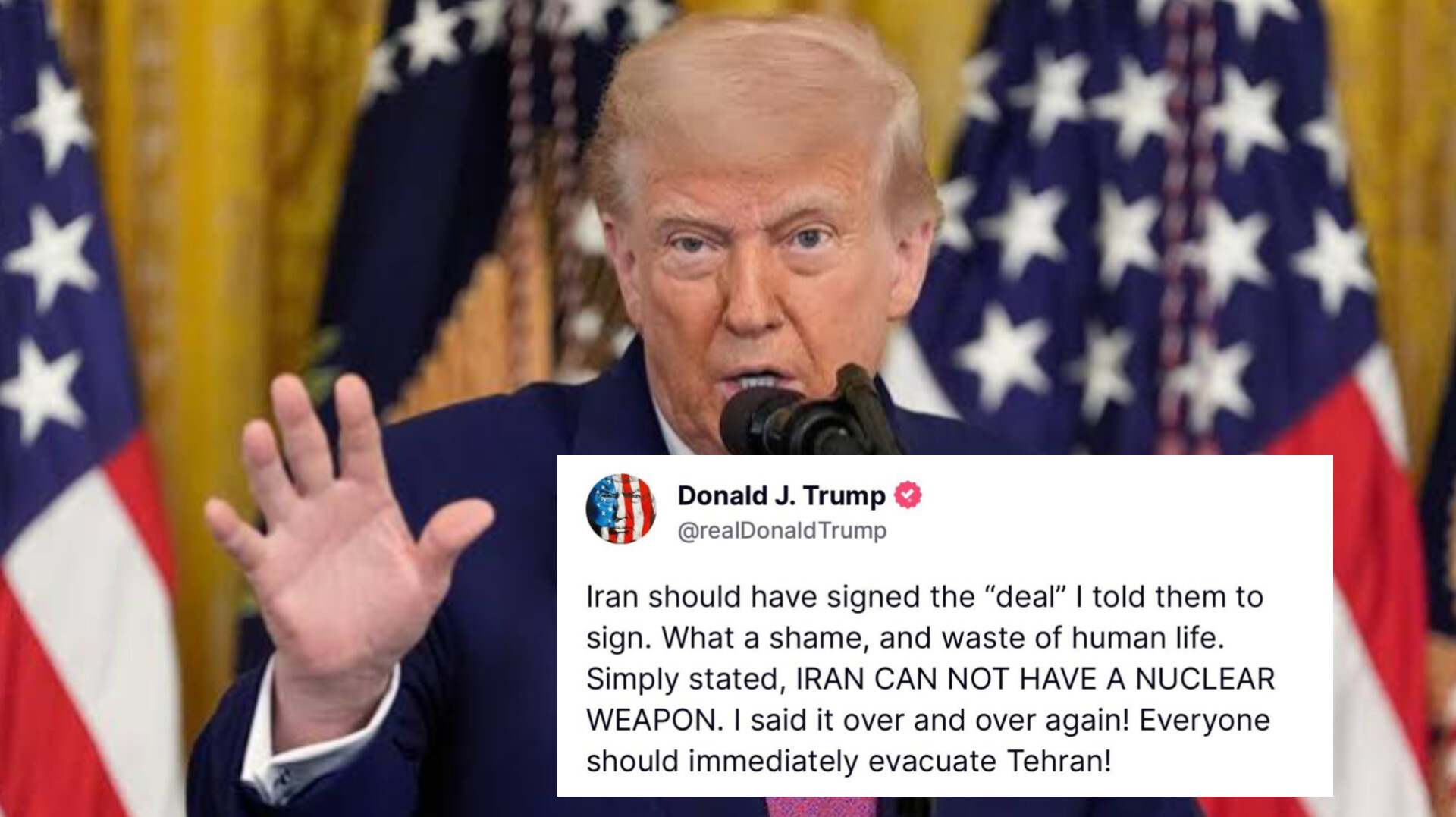
U.S. President Donald Trump caused alarm in Iran on Monday night after calling for the immediate evacuation of Tehran, as the conflict between Israel and the Islamic Republic showed signs of intensifying.
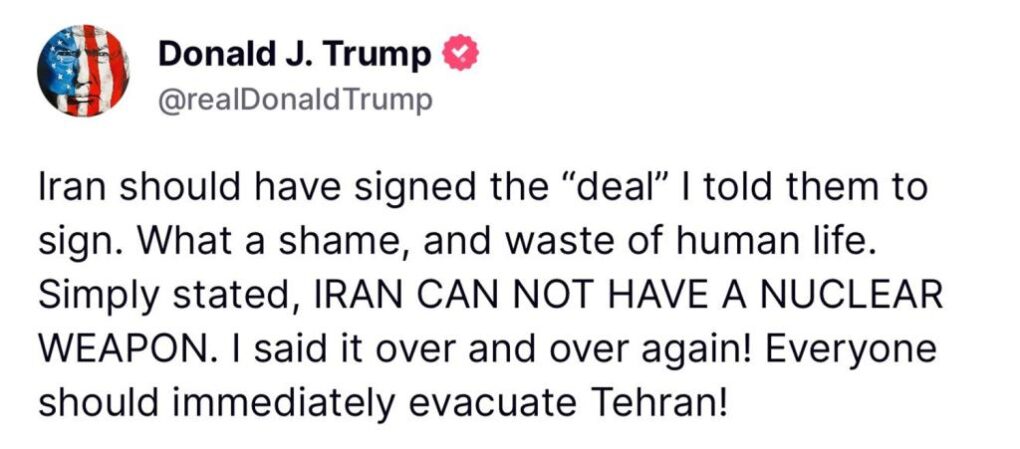
“Iran should have signed the ‘deal’ I told them to sign. What a shame, and waste of human life. Simply stated, IRAN CAN NOT HAVE A NUCLEAR WEAPON. I said it over and over again! Everyone should immediately evacuate Tehran!” Trump posted on his Truth Social account.
Shortly after President Trump’s evacuation call regarding Tehran, Press Secretary Karoline Leavitt announced that he would leave the G7 leaders summit in Canada ahead of schedule to return to the White House and consult with his advisers on the intensifying Israel-Iran conflict, now in its fifth day.
Trump’s warning followed earlier calls from Israeli officials urging civilians to evacuate Tehran ahead of continued military operations. The ongoing hostilities have included multiple missile exchanges between the two nations.
The evacuation zone in central Tehran covers an estimated 330,000 people and includes key sites such as Iran’s state television headquarters, police command, and three major hospitals—one of which is operated by the paramilitary Revolutionary Guard.
Iranian officials dismissed Israel’s evacuation notice as “psychological warfare,” refusing to acknowledge it as a legitimate threat.
Late Monday, G7 leaders released a joint statement addressing the Israel-Iran crisis. Though U.S. officials had earlier indicated that President Trump might not sign, he ultimately endorsed the statement.
The communiqué expressed strong support for Israel’s right to self-defence and read in part:
“We affirm that Israel has a right to defend itself. We reiterate our support for the security of Israel. We also affirm the importance of the protection of civilians. Iran is the principal source of regional instability and terror. We have been consistently clear that Iran can never have a nuclear weapon. We urge that the resolution of the Iranian crisis leads to a broader de-escalation of hostilities in the Middle East, including a ceasefire in Gaza.”
The G7 also highlighted concerns about global energy markets, stating:
“We will remain vigilant to the implications for international energy markets and stand ready to coordinate, including with like-minded partners, to safeguard market stability.”

