
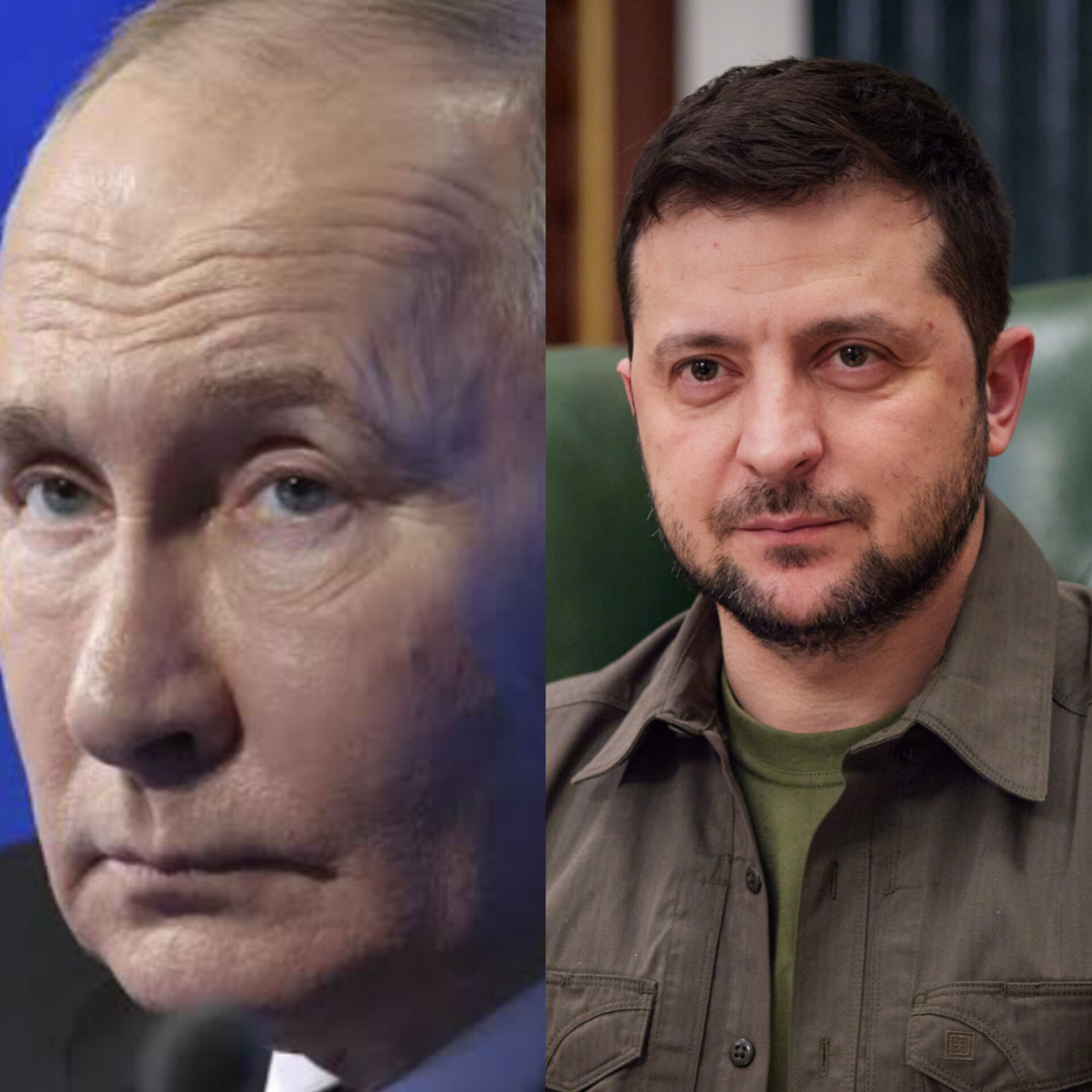
According to a report by the state news agency TASS on Saturday, May 5, Russia has initiated a criminal case against Ukrainian President Volodymyr Zelensky and has subsequently placed him on a wanted list. However, Ukraine swiftly dismissed this action as a manifestation of Moscow’s desperation. The TASS report indicated that Zelensky’s name appeared in the database of the Russian Interior Ministry as a wanted individual, although no further specifics were provided.
In response, Ukraine’s foreign ministry released a statement asserting that Russian President Vladimir Putin could also face arrest under an International Criminal Court warrant. The statement emphasized the tangible nature of the warrant, contrasting it with what it deemed as “worthless Russian announcements.” The ministry underscored the seriousness of the situation, highlighting the potential international ramifications of Putin’s alleged involvement in war crimes.
Characterizing the Russian announcement as a testament to the desperation of the Russian state apparatus and its propaganda machinery, Ukraine condemned the move as a ploy to attract attention. This rhetoric reflects the ongoing tensions between the two countries amid the protracted conflict.
The report also noted Russia’s history of issuing arrest warrants for various Ukrainian and European politicians since the outset of the conflict in February 2022. Instances cited included the placement of Estonian Prime Minister Kaja Kallas, Lithuania’s culture minister, and members of the previous Latvian parliament on a wanted list for their alleged involvement in destroying Soviet-era monuments.
Moreover, Russia’s issuance of an arrest warrant for the International Criminal Court prosecutor, who had previously prepared a war crimes warrant against Putin, further underscores the complex geopolitical dynamics at play.

