Kenya’s emergence as the preeminent exporter of garments to the United States within the African continent stands as a testament to the enduring strength of the collaborative efforts between the two nations. This landmark achievement is the culmination of a longstanding and mutually beneficial partnership underscored by substantial investments and joint endeavors aimed at fostering economic growth and prosperity.
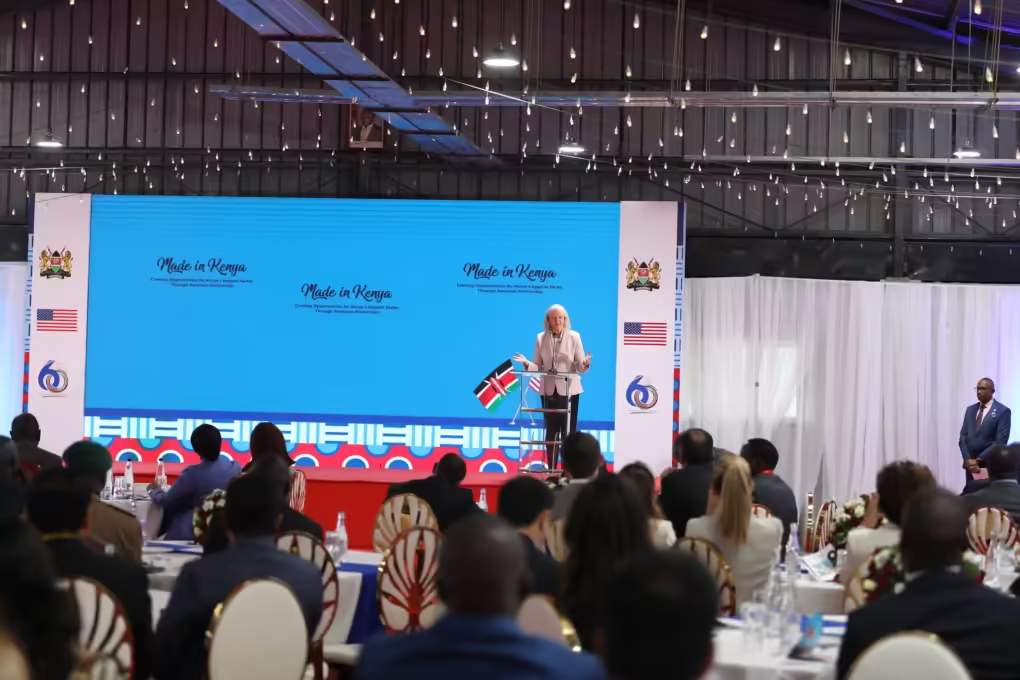
Central to the success story is the profound impact of partnership, wherein Kenya and the United States have synergized their resources and expertise to advance their shared objectives. This collaborative spirit was vividly exemplified during the recent inauguration ceremony of Nexgen Packaging Kenya EPZ Limited, strategically located in Athi River within Machakos County.
The unveiling of this cutting-edge apparel brand identification and packaging facility, boasting a remarkable investment of $2 million (equivalent to approximately Sh270 million), serves as a symbol of the unwavering commitment to enhancing Kenya’s textile industry. Furthermore, the endeavor received a substantial boost through a generous grant of $750,000 (approximately Sh100 million) from the United States Agency for International Development (USAID), further solidifying the bond of cooperation between the two nations.
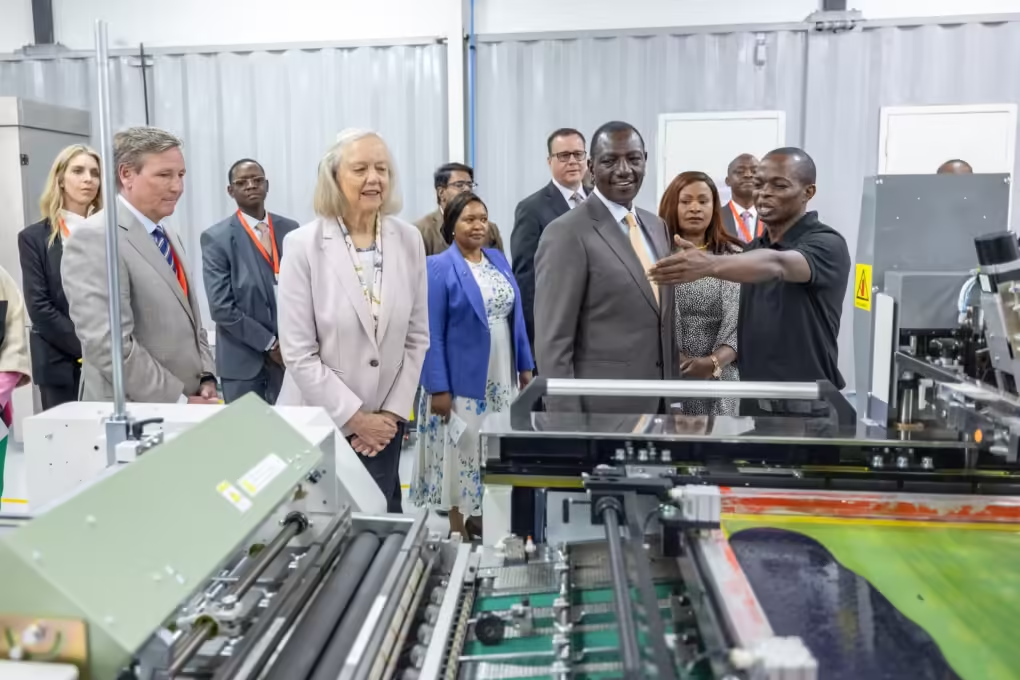
The establishment of this factory transcends its role as merely a production site; rather, it represents a beacon of hope for job creation and economic advancement, poised to significantly bolster Kenya’s apparel exports to the United States. The presence of President William Ruto, alongside esteemed dignitaries such as U.S. Ambassador Meg Whitman and other notable guests, at the inauguration ceremony underscores the shared commitment to propelling Kenya’s textile industry to greater heights.
The impact of such ventures extends far beyond the confines of economic statistics, reverberating through the social fabric of the nation. President Ruto, in his address at the event, lauded the transformative influence of American investments, emphasizing their role in generating high-quality employment opportunities for the Kenyan populace and fostering economic synergies between the two nations. He articulated, “These investments by American companies create quality jobs for Kenyans and economic opportunities for both of our countries.”
Moreover, President Ruto underscored Kenya’s ascendance as the foremost garment exporter to the United States within the African continent, attributing this remarkable feat to the strategic implementation of the Africa Growth and Opportunities Act (AGOA) apparel strategy. He remarked, “Kenya is now the biggest garment exporter to the U.S. in Africa, and our Africa Growth and Opportunities Act apparel strategy has stimulated a 12-fold increase in the value of exports in the last two decades.”
Ambassador Meg Whitman echoed President Ruto’s sentiments, highlighting the symbiotic nature of the Kenya-U.S. partnership in fostering prosperity and development. She emphasized, “USAID’s investments are ensuring Kenyan prosperity through American partnership,” underscoring the collaborative efforts aimed at driving sustainable growth and prosperity.
The significant contributions of USAID’s investments in Kenya’s economic landscape cannot be overstated. These investments have not only injected $67 million in direct capital but have also catalyzed the creation of approximately 20,000 new jobs within the country, thereby amplifying the positive ripple effects of partnership and cooperation between Kenya and the United States.
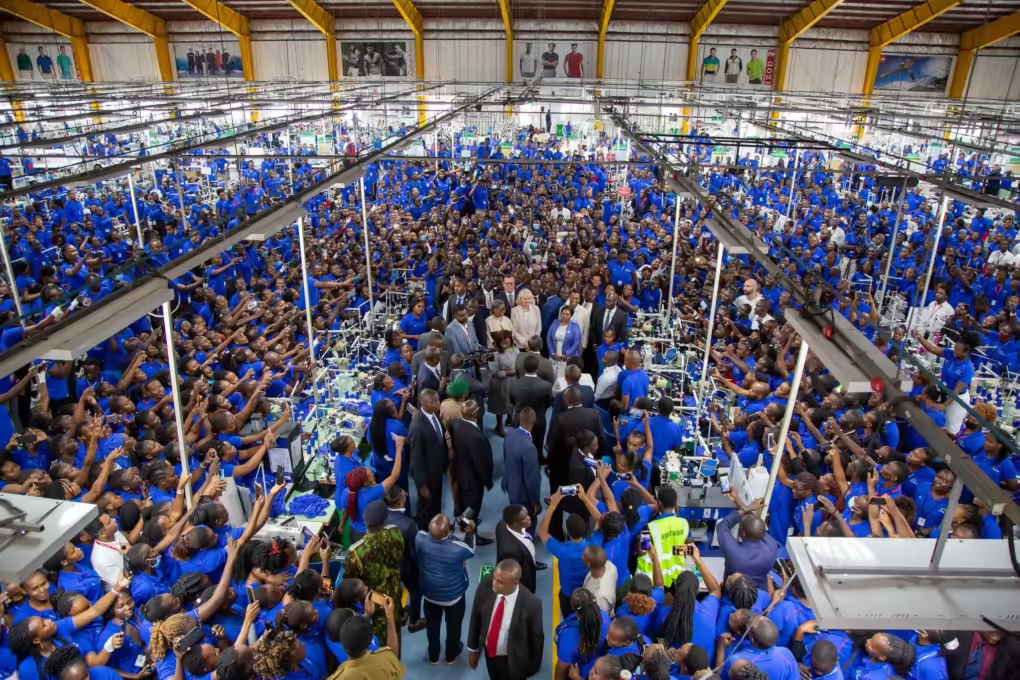
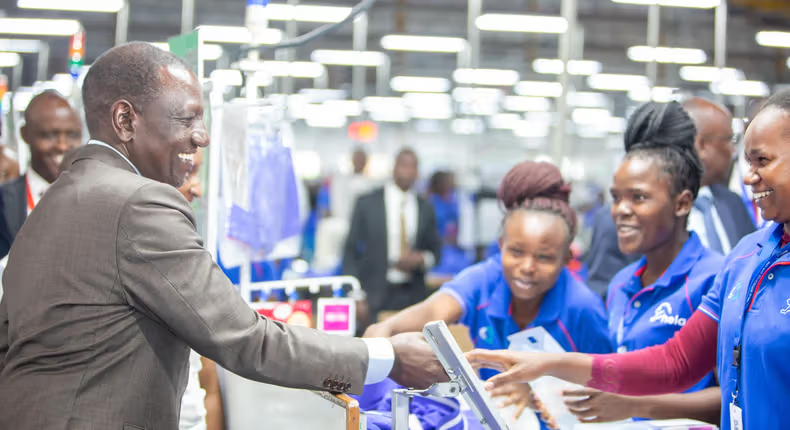
President William Ruto during a tour of Hela Apparel factory in Athi River, Machakos County on April 23, 2024
The question of “Why Kenya?” beckons an exploration into the multifaceted facets that underpin its unparalleled supremacy in the textile market. Kenya’s ascendancy in this domain transcends mere external support, delving deep into the reservoir of its intrinsic strengths and advantages.
At the heart of Kenya’s textile prowess lies its dynamic economic ecosystem, characterized by the presence of a highly skilled, tech-savvy, and innovative workforce. This workforce, nurtured and honed through a sustained investment of $5 billion annually in the education sector, constitutes the bedrock of Kenya’s competitive edge. Equipped with cutting-edge knowledge and capabilities, these individuals stand poised to excel in a fiercely competitive global landscape, driving innovation and fostering sustainable growth in the textile industry.
Furthermore, Kenya’s strategic geographic location assumes paramount significance in bolstering its position as a textile powerhouse. Situated at the crossroads of Eastern and Central Africa, Kenya serves as a pivotal gateway to these burgeoning markets. Its well-developed transport infrastructure, including modern ports, extensive road networks, and efficient air connectivity, facilitates seamless trade and commerce, thereby augmenting its allure as a premier investment destination for textile enterprises.
In essence, Kenya’s dominance in the textile market is not merely a product of serendipity but a strategic amalgamation of its human capital, geographical advantages, and infrastructural prowess. As the nation continues to harness these inherent strengths and leverage its competitive advantages, it is poised to chart a trajectory of sustained growth and prosperity in the global textile arena.
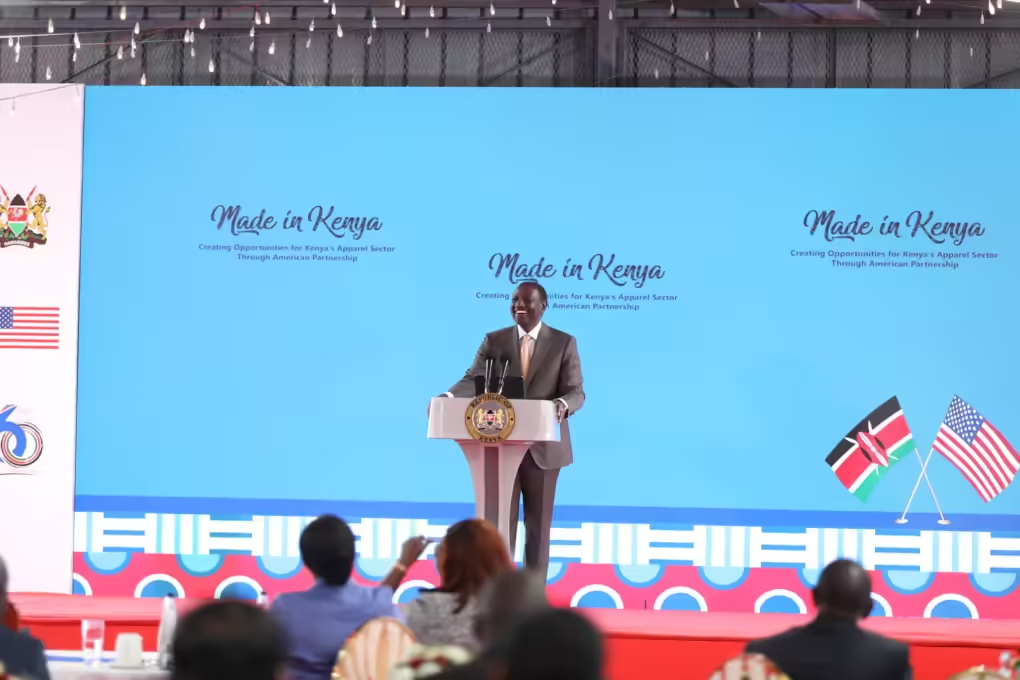
President William Ruto during the launch of the Nexgen Packaging Kenya EPZ Limited in Athi River, Machakos County on April 23, 2024
Gazing ahead, the horizon of possibilities appears bright, with ambitious endeavors on the horizon to catapult local cotton production from its current span of 8,000 acres to an expansive 200,000 acres in the forthcoming years. These visionary initiatives are poised to fortify the supply chain infrastructure of the textile sector, fostering a sustainable trajectory of growth and development.
As Kenya embarks on this journey of transformation and enhancement within its textile and apparel domain, it emerges as a beacon of inspiration, showcasing the transformative potential of strategic international collaborations intertwined with indigenous innovation and ingenuity. The symbiotic relationship between Kenya’s proactive initiatives and the unwavering support extended by the United States epitomizes a compelling narrative of progress and triumph.
In this narrative, Kenya transcends the role of a mere participant and ascends to the esteemed position of a frontrunner in the global textile industry. Through the seamless fusion of strategic foresight, concerted efforts, and unwavering commitment, Kenya propels itself to the forefront of textile innovation and excellence, setting new benchmarks of success and establishing itself as a trailblazer in the international arena.