
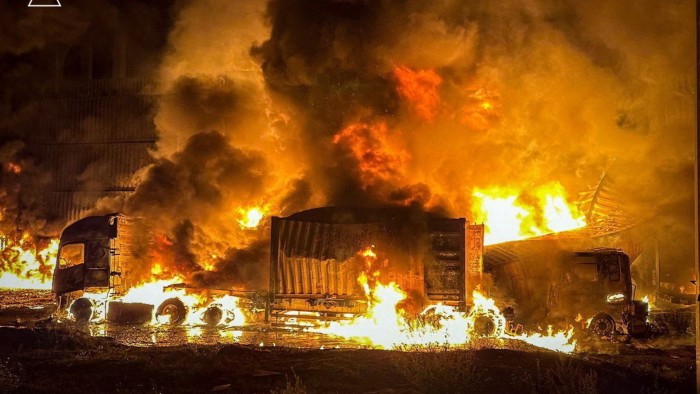
Russia launched a wave of missile and drone attacks on Ukraine’s energy infrastructure early Thursday, October 16, striking gas facilities in the east and triggering widespread power outages across eight regions — the latest large-scale assault on Ukraine’s energy network as winter approaches.
Since invading Ukraine in 2022, Moscow has repeatedly targeted the country’s power infrastructure each winter, seeking to cripple the energy grid and force Kyiv into emergency blackouts and greater dependence on foreign energy supplies.
“There are hits and destruction in several regions at once. The operation of a number of critically important facilities has been halted,” said Sergii Koretskyi, CEO of Ukraine’s state gas company Naftogaz.
Ukraine’s national grid operator confirmed emergency power cuts in eight regions after the strikes. “This autumn, the Russians use every single day to strike at our energy infrastructure,” President Volodymyr Zelensky said.
According to Ukraine’s air force, Russia launched 320 drones and 37 missiles, with 283 drones and five missiles intercepted. The Kharkiv and Poltava regions were among the hardest hit, forcing DTEK — Ukraine’s largest private energy company — to shut down a major gas production facility.
Reports suggest that recent Russian attacks have knocked out around 60 percent of Ukraine’s gas production, while damage to power plants has left hundreds of thousands without electricity.
Although the Kremlin claims it only targets military infrastructure, international observers have accused Moscow of deliberately striking civilian facilities. The International Criminal Court (ICC) last year issued arrest warrants for two senior Russian military officials, stating that the attacks on Ukraine’s energy network amounted to war crimes because of the “excessive harm” caused to civilians.
In response, Kyiv has renewed appeals for additional air defence systems from Western allies to protect vital energy sites, while Ukrainian forces have intensified retaliatory strikes on Russian oil refineries to disrupt Moscow’s energy output.

