
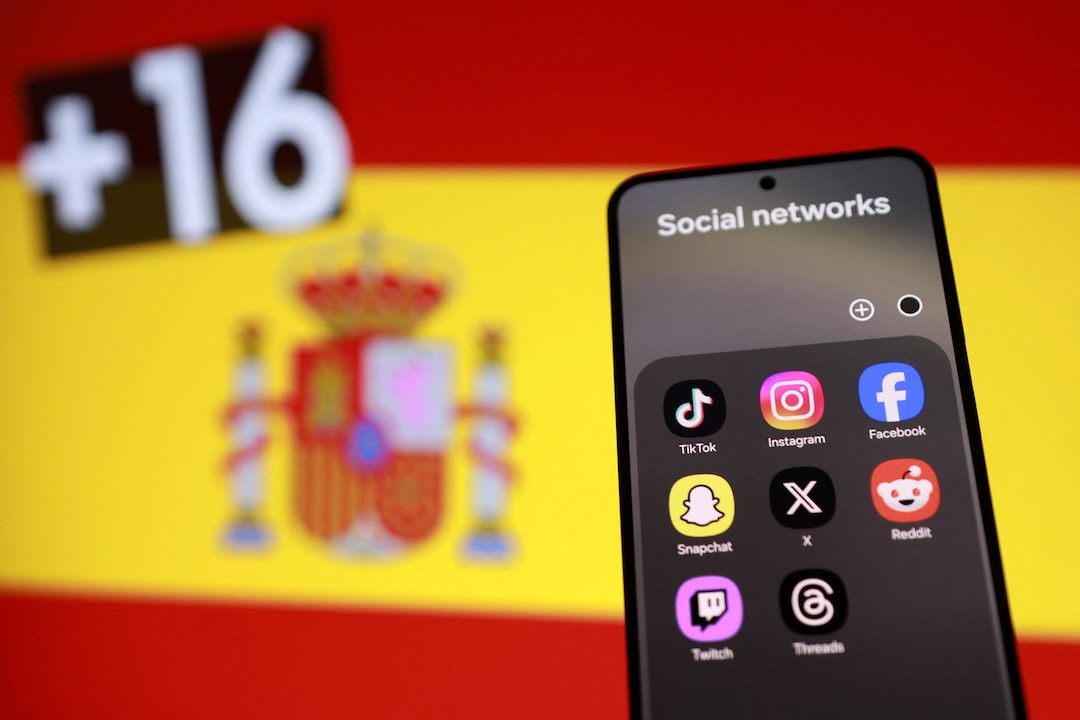
Spanish Prime Minister Pedro Sánchez has announced plans to ban children under the age of 16 from accessing social media, as part of a broader effort to tighten control over the digital space.
Speaking at the World Government Summit in Dubai, Sánchez said social media platforms would be required to introduce effective age-verification systems, stressing that simple checkboxes would no longer be acceptable. He warned that children are being exposed to online spaces they are not equipped to navigate on their own and said the government has a responsibility to protect minors.
The proposed ban is expected to be approved by Spain’s Council of Ministers next week and will amend a draft bill currently under debate in parliament.
According to Sánchez, the move forms part of a wider package of digital reforms aimed at what he described as “regaining control” of the online environment. He argued that governments can no longer ignore the spread of harmful and illegal content on social media platforms.
The proposals include measures to hold social media executives legally responsible for illegal content shared on their platforms, alongside new tools to track the spread of disinformation, hate speech, and child exploitation material. The plan also seeks to criminalize the manipulation of algorithms that amplify illegal content for profit.
Sánchez said platforms whose algorithms promote disinformation would be investigated, adding that the spread of hate should carry legal, economic, and ethical consequences.
Spain’s move aligns with a growing trend across Europe to strengthen restrictions on children’s access to social media. Denmark has announced plans to ban under-15s from social platforms, while France is pushing to introduce similar restrictions as early as September. In Portugal, draft legislation has been submitted that would require parental consent for children under 16 to access social media.

