
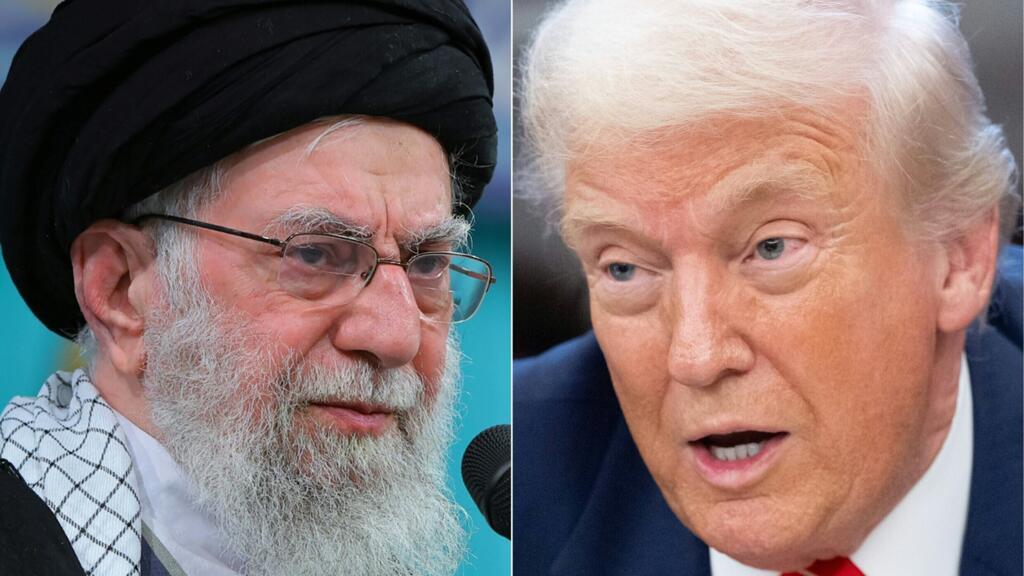
U.S. President Donald Trump has issued a stark warning to Iran’s Supreme Leader, Ayatollah Ali Khamenei, saying he should be “very worried” as Washington and Tehran prepare for their first formal talks since last year’s U.S. strike on Iran’s nuclear program.
Tensions between the two countries have intensified in recent weeks following a deadly crackdown by Iranian security forces on nationwide anti-government protests. The unrest prompted Trump to deploy a U.S. military armada to the region and threaten further military action. Iran, in response, warned that any attack would trigger swift retaliation against U.S. forces and assets in the Middle East.
“I would say he should be very worried. Yeah, he should be,” Trump told NBC News on Wednesday, referring to Khamenei. Trump also claimed Iran had attempted to revive its nuclear ambitions at alternative sites after the U.S. bombing. “There was total obliteration,” he said, adding that the U.S. had warned Iran against starting a new facility elsewhere.
As regional tensions simmer, neighboring countries have stepped in to mediate, warning that a direct conflict could destabilize the Middle East. The situation has already seen close military encounters. On Tuesday, a U.S. aircraft carrier shot down an Iranian drone in the Arabian Sea, while Iran’s Revolutionary Guard later threatened to seize a U.S.-flagged tanker in the Strait of Hormuz.
Trump first raised the prospect of military action last month during Iran’s widespread protests and near-total internet blackout. Although connectivity has been partially restored, experts say Iran’s digital future remains uncertain. Trump has argued that his tough stance has bolstered protesters, even without direct intervention.
High-stakes talks are scheduled for Friday in Muscat, Oman, involving Iranian Foreign Minister Abbas Araghchi and Trump’s special envoy Steve Witkoff, according to Iran’s state-linked Tasnim news agency. However, expectations are tempered by differing priorities.
U.S. Secretary of State Marco Rubio said Washington wants negotiations to address Iran’s nuclear ambitions, ballistic missile program, support for militant groups, and human rights record. Iran, however, insists the talks should focus solely on its nuclear program and the lifting of sanctions.
Previous indirect nuclear talks earlier this year collapsed after an Israeli strike on Iran in mid-June, followed shortly by U.S. military action. Trump defended the strike, saying it altered the regional balance.
“If we didn’t take out that nuclear, we wouldn’t have peace in the Middle East,” he said, adding that Arab states are no longer afraid of Iran.

