
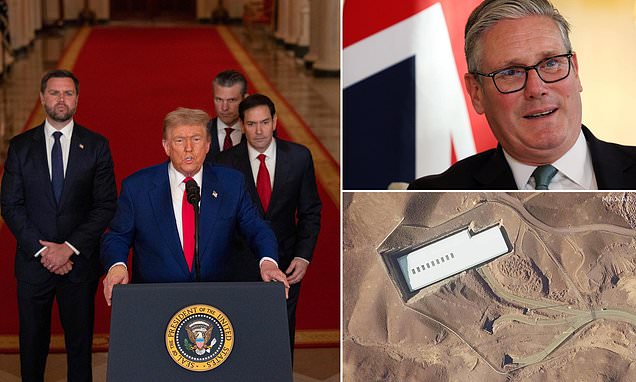
As tensions continue to rise in the Middle East, global powers have issued sharply contrasting responses to the recent U.S. airstrikes on Iran.
On Sunday, June 22, American warplanes targeted three Iranian nuclear facilities—Natanz, Isfahan, and Fordow—on the orders of President Donald Trump. The strikes mark a major escalation in the region, prompting swift international reactions.
British Prime Minister Keir Starmer described Iran’s nuclear ambitions as “a serious threat to global security” and backed the U.S. action as a step to contain that threat. He also called on Iran to return to diplomatic talks, a message echoed by Foreign Secretary David Lammy, who urged Tehran to exercise restraint.
European Commission President Ursula von der Leyen stressed the need for diplomacy, saying, “Stability must take precedence, and adherence to international law is essential. Iran must return to credible negotiations to help defuse this crisis.”
Japan’s Prime Minister Shigeru Ishiba also called for immediate de-escalation while emphasising the urgency of halting Iran’s nuclear weapons development. “What matters most now is easing tensions, but preventing further nuclear development is equally critical,” he said.
However, China and Russia issued strong condemnations of the U.S. strikes. China’s foreign ministry called the operation “a grave breach” of the UN Charter and international law, warning that such actions would only deepen instability in the region. The ministry urged all sides, including Israel, to enforce a ceasefire and return to peaceful dialogue.
Russia echoed this stance, labelling the strikes “reckless” and demanding an immediate halt to hostilities. The Russian foreign ministry urged renewed diplomatic engagement to prevent further deterioration of the crisis.
The airstrikes follow weeks of escalating conflict between Iran and Israel, with Tehran warning that U.S. involvement could lead to long-term consequences. As the global response remains divided, the path to peace appears increasingly uncertain.

