
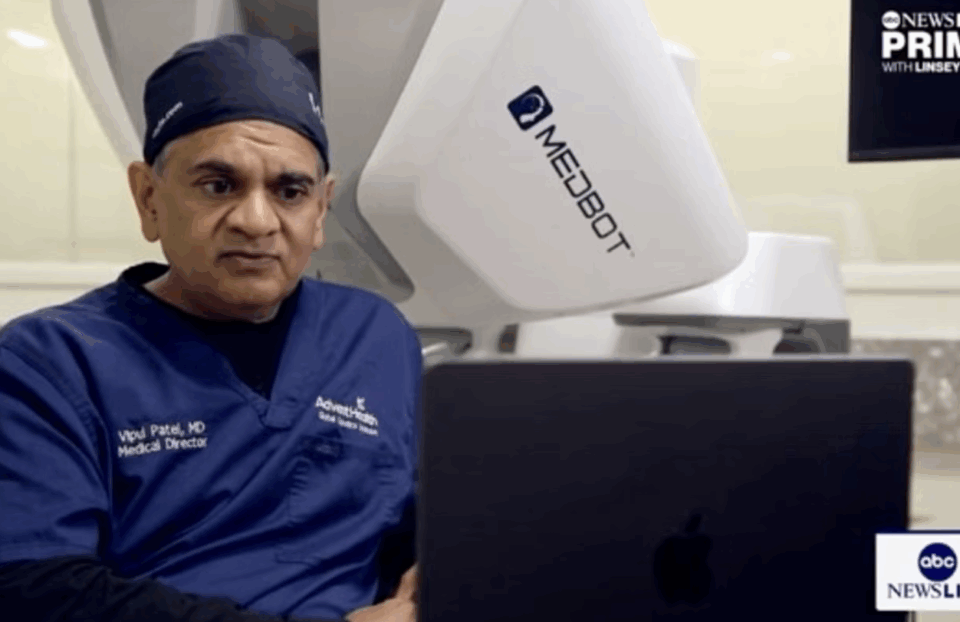
Vipul Patel, a Florida-based medical doctor and Medical Director of the Global Robotic Institute at Orlando’s Advent Health, has successfully performed a prostatectomy on Fernando da Silva, a 67-year-old man from Angola, using robotic telesurgery technology. The surgery, which involved removing part or all of the prostate due to a cancer diagnosis, marked a significant advancement in global healthcare.
According to The Independent, which cited a report from ABC News on Tuesday, Patel conducted the procedure in June using a method known as transcontinental robotic telesurgery. This allowed him to operate on da Silva from thousands of miles away in the United States, sending a robot to perform the procedure in Africa.
Da Silva had been diagnosed with prostate cancer in March. “Prostate cancer is very prevalent in Africa,” Patel said, highlighting the region’s lack of effective monitoring and treatment options in the past. “This surgery was a long time coming,” he added. “We’ve been working on this for two years, travelling the globe in search of the right technologies.”
Da Silva was the first patient in a human clinical trial approved by the U.S. Food and Drug Administration (FDA) to test this new robotic surgery technology remotely. While robotic surgery is not new, Patel’s operation was groundbreaking in its distance—surgeons typically operate robots while remaining in close proximity to their patients.
Using fibre optic cables, Patel controlled the robot from the U.S. with no noticeable delay. “There was no perceptible delay in my brain,” he said. His surgical team remained physically present in the Angolan operating room as a backup. “We made sure we had plans A, B, C, and D. I always have my team where the patient is,” he said, adding that they were ready to take over if any technical issues occurred.
Reflecting on the achievement, Patel described it as a milestone. “It was a small step for a surgeon, but a huge leap for health care,” he said. “The humanitarian implications are enormous.”
He believes this innovation could greatly benefit underserved regions globally, as well as rural communities in the United States. “Emergency room physicians will have technology that can be remotely accessible to surgeons,” he explained. “Maybe even in ambulances, where patients can receive remote interventions if they can’t get to a hospital.”
Patel intends to submit the data collected during the operation to the FDA, aiming to expand the use of telesurgery in the future.

