
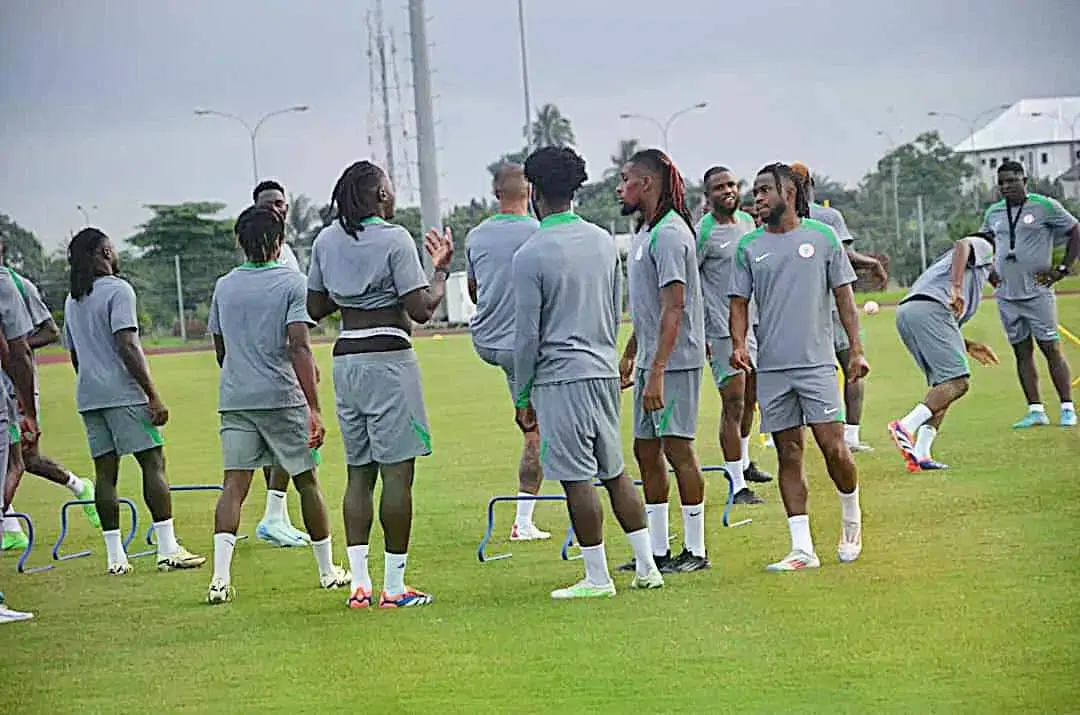
The head coach position for the Super Eagles has been in flux since February 2024.
After guiding the team to a second-place finish at the 2023 Africa Cup of Nations (AFCON) in Ivory Coast, Portuguese manager José Peseiro chose not to renew his contract with the three-time African champions.
Following Peseiro’s exit, his assistant, Finidi George, stepped in as interim coach but struggled during a brief stint. George resigned in June after poor results, leaving Austin Eguavoen to assume interim duties. Eguavoen has since led the team to three wins, one loss, and a draw, securing qualification for the 2025 AFCON in the process.
Despite Eguavoen’s performance, the Nigeria Football Federation (NFF) remains intent on appointing a foreign coach, citing doubts about Eguavoen’s long-term suitability. Several high-profile managers have expressed interest, including Herve Renard, Antonio Conceição, Tom Saintfiet, Fabio Cannavaro, and former Manchester United youth coach Jonathan Hill.
NFF President Ibrahim Gusau recently revealed, while defending the 2025 budget, that the federation is in talks with corporate sponsors like Dangote Group, MTN, and Baba Ijebu to secure funds for hiring a foreign coach. While acknowledging Eguavoen’s efforts, Gusau emphasised the need to resolve financial issues before proceeding with the appointment.
“The NFF is committed to hiring a foreign coach, but we must first address the payment challenges,” Gusau stated, signalling that Eguavoen’s interim tenure is nearing its end.
Despite the uncertainties, the Super Eagles’ head coach role continues to attract high-profile interest. What makes the position so appealing?
1. Player Quality
The Super Eagles boast a roster of top talent, including Victor Osimhen, who ranked 8th in the 2023 Ballon d’Or, and Ademola Lookman, who placed 14th in 2024. Other standouts include Victor Boniface, Alex Iwobi, Wilfred Ndidi, and Maduka Okoye.
Nigeria’s talent pool extends beyond Europe’s top leagues, with promising players emerging from the domestic league, youth teams, and those eligible to switch allegiance from European nations. Managing such a talented squad is a major draw for coaches seeking international success.
2. Footballing Pedigree
The Super Eagles’ rich history enhances the role’s prestige. With three AFCON titles, five silver medals, eight bronze medals, an Olympic gold from 1996, and six FIFA World Cup appearances, Nigeria is one of Africa’s most storied football nations.
Coaching the Super Eagles offers managers a chance to contribute to this legacy, achieve historic milestones, and cement their reputations on the continent and beyond.
3. Path to the 2026 FIFA World Cup
Nigeria’s quest for a spot at the 2026 FIFA World Cup presents both challenges and opportunities. Although currently fifth in Group B, which includes South Africa, Rwanda, Benin, Lesotho, and Zimbabwe, the expanded CAF qualification system provides nine direct World Cup spots and one additional play-off opportunity.
To qualify, the Super Eagles must win at least five of their remaining matches—a feasible task given their group’s relative strength. Guiding Nigeria back to the World Cup after missing the 2022 edition is an attractive prospect for any manager. Success in the qualifiers could set the stage for leading one of Africa’s most talented teams on football’s grandest stage.

