
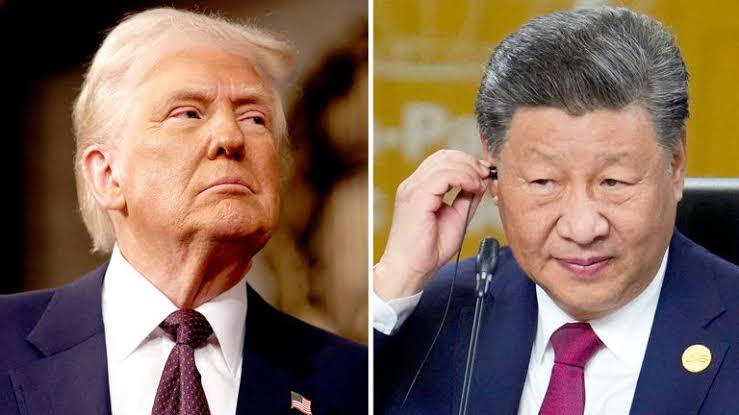
The Trump administration has followed through on its threats to sharply increase tariffs on Chinese imports, imposing a total 104% tariff through a new 50% tax and an existing 34% reciprocal measure.
The significant tariff hike took effect at 12:01 a.m. ET on Wednesday, impacting not just China, but also 184 other U.S. trading partners.
This move marked a dramatic escalation in U.S.-China relations. In response to President Trump’s announcement of new tariffs on Monday, Beijing vowed to “fight to the end” after China’s initial retaliatory measures. White House press secretary Karoline Leavitt stated on Tuesday, “It was a mistake for China to retaliate.”
Markets responded quickly to the mounting uncertainty. U.S. stocks, which had been rising on hopes of renewed negotiations driven by Treasury Secretary Scott Bessent’s push, plummeted after the tariff news was released. Major stock indexes closed sharply lower.
Despite these tensions, Trump expressed confidence that countries would be willing to return to the negotiation table. “We’re going to get fair deals and good deals with every country, and if we don’t, then we’re going to have nothing to do with them,” he said Monday at the White House. Talks with Japan and South Korea have reportedly started.
On April 2, Trump had introduced a blanket 10% tariff on all imports into the U.S., alongside additional duties on 185 countries he labeled the “worst offenders” in unfair trade practices. These tariffs are set to take effect on April 9.
The global response has been mixed. Some countries are still evaluating their next moves, while others have begun retaliating. Canada has imposed new tariffs on certain U.S. vehicles, and the European Union is preparing its own countermeasures. Under the new U.S. tariffs, EU goods will face a 20% duty, affecting approximately 70% of the bloc’s exports to the U.S.
Businesses worldwide are already adjusting to the situation, with many beginning to raise prices in anticipation of prolonged trade disruptions.

