
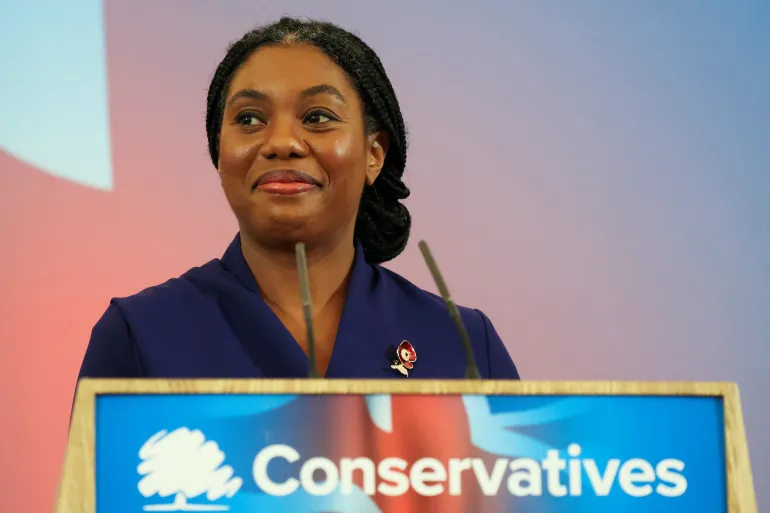
The phrase, “Here we go again,” crossed my mind as I observed the excited reactions of some Africans, particularly the educated elite, to Kemi Badenoch’s election as the new leader of Britain’s Conservative Party.
Questions, questions!
Why is it so difficult for some of us to develop basic critical thinking skills, despite our education and degrees?
Why do we always get swept up in ethnic and tribal concerns?
Why can’t we, like most rational people, develop the ability to question what those who claim to represent us are actually bringing to the table to improve our situation?
As I wrote in my essay, *Obama’s Legacy,* “Sadly, the Obama illusion left the Black world reeling from colossal disappointment. I vividly recall the lamentations of the Great Sociologist W.E.B. Du Bois in his classic *The Souls of Black Folk,* where he said, ‘The nation has not yet found peace from its sins; the freedman has not yet found in freedom his promised land. Whatever good may have come in these years of change, the shadow of a deep disappointment rests upon the Negro people – a disappointment all the more bitter because the unattained ideal was unbound by the simple ignorance of a lowly people.'”
Yet, here we go again, enthusiastically cheering for a “sister” who, throughout her career, has shown that she does not want to be associated with us, our struggles, or our aspirations!
Why can’t we, like most rational human beings, develop the ability to critically assess what those who claim to represent us are bringing to the table to improve our situation?
Are we too naive to see the strategic thinking behind selecting Black “leaders” like Obama and Kemi?
Why do we keep forgetting Truman’s admonition that politics is always planned?
Did we ever stop to ask ourselves what role we played in selecting these leaders, or why we should expect leaders chosen by others to serve our interests?
Do we believe that a white American president would have gotten away with Obama’s vast failures in relation to Africa without being labelled as racist, a colonizer, or an imperialist?
As the late Lucky Dube sang, “Not every black man is my brother, not every white man is my enemy.”
Unfortunately, the simple yet crucial logic that having someone who looks like us in power doesn’t always equate to loyalty to our struggles or interests is often overlooked in discussions about racial identity and representation.
Kemi Badenoch’s election mirrors the experience many Black people faced during Barack Obama’s presidency in the United States.
Continue reading here

